Bronze Powder Paste vs. Dry Bronze Powder: 4 Things to Check Before Buying
2026 / 10 / 22
1. What Is the Difference Between Bronze Powder Paste and Dry Bronze Powder?
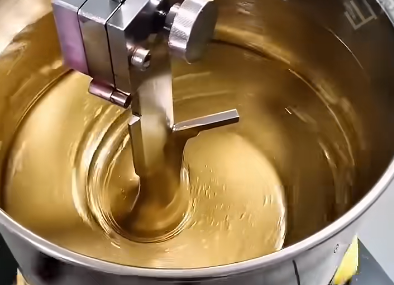
When developing a new metallic coating, manufacturers often face a practical decision: should they purchase dry bronze powder and disperse it in-house, or choose ready-made bronze powder paste?
The choice becomes more important when production volumes are relatively small but multiple colors are required. Poor dispersion can reduce metallic brightness, while incompatibility between the paste carrier and the resin system may cause coarse particles, floating, or inconsistent appearance.
The main difference between bronze powder paste and dry bronze powder is not simply their physical form. It is where the dispersion process takes place and how much control the user needs over the formulation.
Dry bronze powder is a metallic pigment supplied in powder form. The user must handle wetting, dispersion, and process control before achieving the desired finish.
Bronze powder paste contains bronze metallic pigment pre-dispersed in a carrier. It can simplify production, but its carrier must be compatible with the intended resin and formulation.
| Comparison | Dry Bronze Powder | Bronze Powder Paste |
| Dispersion | Performed by the user | Pre-dispersed by the supplier |
| Color changes | Requires formulation and process adjustments | Different prepared grades may simplify color changes |
| Storage | Requires sealed, dry storage | Requires attention to sealing, shelf life, and temperature |
| Consistency | Depends on in-house process control | Depends on supplier dispersion quality and batch consistency |
| Cost structure | Lower material cost may be possible, but processing costs apply | Price includes additional processing and carrier costs |
Neither form is universally better. The right choice depends on production volume, available equipment, formulation requirements, and the cost of maintaining consistent quality.
2. When Should You Choose Bronze Powder Paste?
Bronze powder paste may be a practical option for manufacturers with small production batches, multiple colors, limited dispersion equipment, or frequent product changes.
Key advantages include:
-
Simplified production: Pre-dispersion can reduce the need for in-house pigment dispersion.
-
Faster color changes: Prepared grades can help shorten preparation time when different colors or finishes are required.
-
Reduced equipment demands: Manufacturers may avoid investing in additional dispersion equipment.
-
More manageable sampling: A suitable paste can help shorten the formulation and sample evaluation process.
However, purchasing paste does not automatically eliminate formulation problems. The carrier is an important consideration. If it is incompatible with the target resin or solvent system, the finished coating may develop roughness, floating, or uneven metallic appearance.
Before placing a bulk order, confirm whether the paste is designed for a solvent-based or water-based system and whether it is suitable for your specific formulation.
3. When Is Dry Bronze Powder the Better Choice?
Dry bronze powder may be more economical for manufacturers with high production volumes, established dispersion equipment, and stable manufacturing procedures.
Its potential advantages include:
-
Greater formulation control: Users can select the carrier and adjust the dispersion process according to their own formulation requirements.
-
Potentially lower material cost: The powder does not include the additional carrier and pre-dispersion processing costs of a paste.
-
Flexible production planning: One powder grade may be evaluated across suitable formulations, subject to compatibility and performance testing.
The trade-off is that dispersion quality depends on the user's equipment, operating conditions, and process consistency.
For repeatable results, manufacturers should document the addition sequence, mixing speed, dispersion time, and other relevant process parameters. These conditions should be validated for the specific bronze powder grade rather than assumed to work for every product.
Storage and inventory also matter. Dry bronze powder should be kept sealed and dry according to the supplier's instructions. Paste products may have additional temperature, settling, skinning, and shelf-life requirements.
4. Four Things to Check Before Buying Bronze Powder Paste
Before purchasing bronze powder paste for industrial coatings or other metallic applications, check the following four points.
1. Carrier and Solvent Compatibility
Confirm whether the paste is solvent-based or water-based and identify its carrier system.
The carrier must be compatible with the resin and other components in the formulation. Poor compatibility can lead to agglomeration, floating, uneven color, or other appearance defects.
Do not select a paste based only on its color or metallic brightness. Request technical information and test it in the actual formulation before bulk purchasing.
2. Solid Content and Measurement Basis
Ask the supplier to specify the paste's solid content and explain how it is measured.
Make sure the reported value is clearly defined, including whether it is expressed on a mass or volume basis where applicable. Different measurement bases are not interchangeable.
Accurate information helps the formulation team calculate addition levels and compare products more fairly. Confirm the recommended dosage and calculation method with the supplier.
3. Batch Samples and Color Consistency
Metallic appearance can vary with pigment characteristics, dispersion conditions, film thickness, application method, and the surrounding formulation.
Before approving a supplier, ask whether batch samples or retained reference samples are available. Agree on how color and appearance will be evaluated, including acceptable variation and the procedure for handling results outside the agreed limits.
For a fair comparison, keep the resin system, addition level, application conditions, and dry-film thickness as consistent as possible.
4. Packaging, Storage, and Shelf Life
Confirm the recommended storage temperature, sealing method, shelf life, and handling requirements after opening.
Some paste products may be sensitive to freezing, prolonged storage, or surface skin formation. Ask the supplier how the product should be stored and whether any specific procedure is required before use.
These details are especially important when purchasing multiple colors or maintaining inventory for small-volume production.
5. How to Choose the Right Bronze Powder Form for Your Production
The decision can be simplified by reviewing three factors:
Production volume: High-volume production with stable demand may benefit from in-house dispersion, while small batches and frequent color changes may favor a suitable pre-dispersed paste.
Process capability: Manufacturers with reliable dispersion equipment and experienced operators have more control over dry powder processing. Facilities with limited equipment may prefer a paste that has been verified for their formulation.
Formulation requirements: If the carrier must be selected or adjusted to meet specific resin requirements, dry bronze powder may offer greater flexibility. If a compatible paste is available, it may help simplify production.
The most reliable approach is to evaluate the product in the intended formulation before making a purchasing decision. Compare the final metallic appearance, dispersion quality, processing time, material consumption, and overall production cost—not just the price per kilogram.
Conclusion: Confirm Compatibility Before Bulk Purchasing
Choosing between bronze powder paste and dry bronze powder depends on more than the purchase price. Production volume, color variety, dispersion capability, carrier compatibility, and storage conditions all influence the final result.
Before placing a bulk order, prepare your resin system, application method, expected monthly consumption, and target metallic appearance. These details help the supplier recommend a suitable bronze powder grade or paste formulation.
Looking for bronze powder for your coating or metallic pigment application? Contact Zhangqiu Metallic Pigment Co., Ltd. to discuss your application requirements and request product information or samples for evaluation.
- Previous:Aluminum Paste for Packaging Inks
- Next:I have no