What Type of Aluminum Paste Should Be Used for Water-Based Coatings?
2026 / 08 / 28As water-based coatings become increasingly common in architectural, industrial and decorative applications, choosing the right metallic pigment has become an important consideration for paint manufacturers. Unlike solvent-based systems, water-based formulations place higher demands on pigment dispersion, storage stability and compatibility with the coating system.
For manufacturers looking for a suitable aluminum paste for water-based coatings, simply choosing a conventional aluminum paste is usually not enough. Water dispersion, anti-gassing performance, surface treatment, particle size and the desired metallic effect should all be considered before making a purchasing decision.
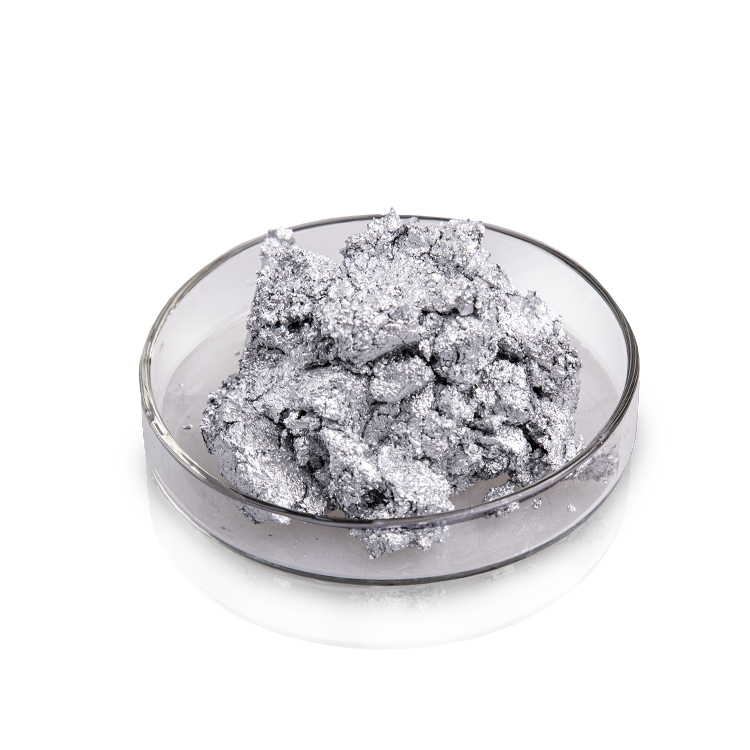
Why Water-Based Coatings Require Special Aluminum Paste
Aluminum is an active metallic pigment, while water-based coating systems contain water as the primary dispersion medium. If the aluminum pigment is not properly designed or treated for a waterborne system, it may cause formulation and storage problems.
Common issues can include:
- Poor dispersion
- Pigment settling
- Loss of metallic brightness
- Hydrogen gas generation
- Poor storage stability
- Uneven coating appearance
Therefore, manufacturers should select an aluminum paste specifically developed for water-based coatings rather than choosing a grade based only on price or metallic brightness.
1. Check Water Dispersion Performance
The first factor to consider is water dispersion.
A suitable aluminum paste should disperse evenly in the coating system without excessive agglomeration or difficult mixing. Good dispersion helps maintain consistent metallic effects and reduces formulation adjustment during production.
For paint manufacturers, this can also help improve:
- Production efficiency
- Batch consistency
- Surface appearance
- Coating uniformity
Before purchasing, it is recommended to test the aluminum paste directly in the customer's actual water-based resin system rather than evaluating the pigment only by appearance.
2. Anti-Gassing Performance Is Critical
One of the most important differences between water-based and solvent-based aluminum paste is the need for anti-gassing performance.
Aluminum can react with water under certain conditions and generate hydrogen gas. This can create problems during storage, especially in sealed containers.
A properly surface-treated aluminum paste can significantly improve stability in water-based formulations.
When evaluating a product, manufacturers should pay attention to:
- Gas generation during storage
- Storage temperature
- Storage duration
- pH of the coating system
- Compatibility with additives and resins
For water-based industrial coatings, anti-gassing performance should be considered a key purchasing criterion rather than an optional feature.
3. Consider Storage Stability
A water-based aluminum paste may perform well immediately after formulation but still experience problems during long-term storage.
Good storage stability helps maintain:
- Uniform pigment distribution
- Consistent metallic appearance
- Stable viscosity
- Reliable application performance
Manufacturers should therefore conduct accelerated and real-time storage tests when developing a new coating formulation.
This is particularly important for commercial coatings that may remain in warehouses or distribution channels for extended periods before use.
4. Choose Particle Size According to the Desired Metallic Effect
Particle size directly influences the appearance of the final coating.
Generally:
Fine aluminum particles can provide smoother and more uniform metallic finishes, while larger particles can create stronger sparkle and a more pronounced metallic effect.
The appropriate grade depends on the target product.
| Desired Effect | Typical Direction |
|---|---|
| Smooth metallic appearance | Fine particle size |
| High brightness | Fine to medium particle size |
| Strong sparkle | Larger particle size |
| Strong visual texture | Larger particle size |
| High hiding power | Depends on formulation and pigment concentration |
Particle size should therefore be selected together with the required brightness, hiding power and surface appearance.
5. Surface Treatment Matters
For water-based systems, surface treatment is another critical factor.
The treatment applied to aluminum flakes influences their interaction with water, resin and other formulation components. A suitable surface treatment can improve water compatibility and help reduce unwanted reactions.
Depending on the formulation, manufacturers may evaluate:
- Water resistance
- Anti-gassing performance
- Dispersion
- Storage stability
- Compatibility with the binder system
This is why two aluminum pastes with similar particle sizes can produce very different results in the same water-based coating.
6. Metallic Effect Should Match the Application
Not every water-based coating requires the same metallic appearance.
For example, architectural coatings may prioritize a smooth and uniform finish, while decorative coatings may require stronger brightness or sparkle.
Water-based aluminum paste can be developed for applications such as:
- Architectural coatings
- Water-based industrial paints
- Metal coatings
- Decorative coatings
- Automotive coatings
- Roof coatings
The final selection should be based on the balance between metallic appearance and formulation stability.
A Practical Purchasing Checklist
When purchasing aluminum paste for a water-based coating project, manufacturers can evaluate the following factors:
✔ Water Dispersion
Can the pigment disperse uniformly in the target coating system?
✔ Anti-Gassing
Does the product maintain stable performance during storage?
✔ Storage Stability
Can the formulation maintain its appearance and performance over time?
✔ Particle Size
Does the particle size match the required metallic effect?
✔ Surface Treatment
Is the pigment surface-treated for compatibility with water-based systems?
✔ Metallic Appearance
Does it provide the required brightness, hiding power and sparkle?
✔ Resin Compatibility
Has the product been tested with the actual resin and additives used in the formulation?
Choosing the Right Aluminum Paste Is More Than Comparing Price
For water-based coatings, the lowest-cost aluminum paste is not necessarily the most economical choice.
A pigment that causes poor dispersion, gas generation or batch instability can lead to:
- Additional formulation adjustments
- Production delays
- Product rejection
- Increased raw material consumption
- Higher overall production costs
A more suitable aluminum paste can help manufacturers achieve stable production and consistent finished-coating performance.
For this reason, purchasing decisions should consider total formulation performance, rather than focusing only on the price per kilogram.
Conclusion
Choosing the right aluminum paste for water-based coatings requires a comprehensive evaluation of water dispersion, anti-gassing performance, storage stability, particle size and surface treatment.
The ideal product should not only provide an attractive metallic finish but also remain stable throughout mixing, storage and application.
For paint manufacturers developing water-based coatings, testing different aluminum paste grades in the actual formulation is the most reliable way to determine the best solution.
- Previous:How to Choose the Right Aluminum Paste for Paint? A Practical Guide for Coating Manufactur
- Next:I have no