How to Choose the Right Aluminum Paste for Paint? A Practical Guide for Coating Manufactur
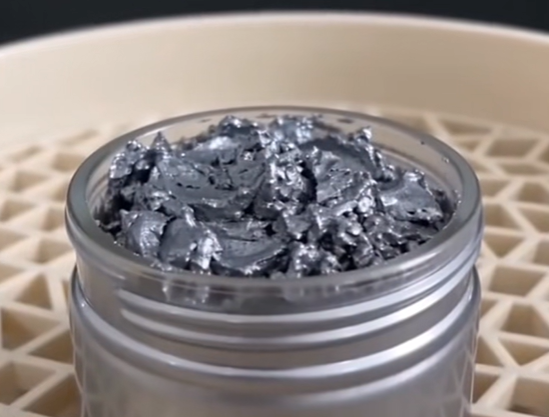
2026 / 08 / 19For coating manufacturers, choosing the right aluminum paste for paint is not simply a matter of selecting the product with the highest brightness.
The final metallic appearance depends on several factors, including particle size, aluminum flake orientation, leafing characteristics, hiding power, resin compatibility, solvent selection, dispersion conditions, and application method.
A suitable aluminum paste can help a coating achieve a bright, uniform, and attractive metallic finish. An unsuitable product, however, may result in poor brightness, uneven appearance, weak hiding power, or formulation instability.
So, how should paint and coating manufacturers choose the right aluminum paste?
This guide provides a practical selection process based on the most important factors.
1. Define the Metallic Effect You Need
The first step is to determine what the finished coating should look like.
Different customers may use the term "metallic silver" to describe completely different visual effects.
For example, you may need:
- A fine and smooth silver appearance
- A bright white metallic effect
- Strong metallic brilliance
- A sparkling silver effect
- A high-hiding metallic finish
- A chrome-like appearance
- A decorative aluminum effect
These different requirements may call for different aluminum pigment grades.
Fine Metallic Effect
Fine aluminum flakes can provide a relatively smooth and refined metallic appearance.
They may be suitable for applications where surface smoothness and a delicate silver effect are important.
Strong Sparkle
Larger aluminum flakes can create stronger visual sparkle and a more distinctive metallic effect.
This type of effect can be considered for decorative coatings and applications where visual impact is a priority.
Therefore, before selecting an aluminum paste for paint, define the desired appearance first.
2. Choose the Appropriate Particle Size
Particle size is one of the key factors affecting the appearance of aluminum pigment in coatings.
In general:
| Aluminum Flake Size | Typical Appearance |
|---|---|
| Fine | Smooth and refined metallic effect |
| Medium | Balanced brightness and metallic texture |
| Large | Strong sparkle and visual impact |
However, particle size should not be considered independently.
The final result is also influenced by the resin, pigment concentration, application method, film thickness, and drying conditions.
For this reason, coating manufacturers should test the selected aluminium paste in the actual formulation before moving to bulk production.
3. Decide Between Leafing and Non-Leafing Aluminum Paste
Another important decision is whether the coating requires leafing aluminum paste or non-leafing aluminum paste.
Leafing Aluminum Paste
In a leafing system, aluminum flakes tend to orient toward the surface of the coating film.
This can create:
- High surface brightness
- Strong reflectivity
- A bright metallic appearance
- A distinctive decorative effect
Leafing grades can be considered for certain decorative, reflective, and specialized coating applications.
Non-Leafing Aluminum Paste
Non-leafing aluminum flakes remain distributed within the coating film rather than concentrating at the surface.
They are widely considered for applications where the metallic pigment needs to remain integrated into the coating film.
Typical applications can include:
- Automotive coatings
- Industrial coatings
- Plastic coatings
- Wheel coatings
- Decorative coatings
The right choice depends on the coating system and the performance requirements of the finished product.
4. Match the Aluminum Paste to the Resin System
One of the most overlooked factors when selecting aluminum paste for paint is resin compatibility.
The same aluminum pigment can produce different results in different resin systems.
A coating manufacturer may find that one formulation produces excellent metallic brightness while another produces a dull or uneven appearance.
This can be related to:
- Resin type
- Resin viscosity
- Surface tension
- Flake orientation
- Leveling performance
- Solvent compatibility
For example, when developing a high-brightness plastic coating, the resin should provide appropriate gloss and film-forming properties to support the desired aluminum flake orientation.
Therefore, selecting aluminum paste and resin should be considered as one formulation decision rather than two completely independent decisions.
5. Consider the Solvent System
The solvent system can also affect aluminum pigment performance.
Important factors include:
- Solvent polarity
- Solvency
- Evaporation rate
- Resin compatibility
- Influence on flake orientation
- Overall formulation stability
An inappropriate solvent system may affect the way aluminum flakes distribute and orient within the coating film.
For high-brightness metallic coatings, manufacturers may need to optimize the evaporation balance so that the aluminum flakes have sufficient opportunity to form the desired orientation during film formation.
For leafing aluminum paste, solvent selection is particularly important because the desired metallic effect depends on the behavior and orientation of the aluminum flakes near the coating surface.
The specific solvent recommendation should always be confirmed against the technical requirements of the selected grade.
6. Pay Attention to Dispersion Conditions
Choosing a high-quality aluminum paste does not guarantee a good metallic finish if the dispersion process is inappropriate.
Aluminum flakes are relatively delicate compared with many conventional pigments.
Excessive shear can damage the flake structure and negatively affect the final metallic appearance.
Therefore, manufacturers should carefully control:
- Mixing speed
- Shear force
- Addition sequence
- Dispersion time
- Temperature
- Order of adding the aluminum paste
In many formulations, the aluminum paste should be incorporated under controlled mixing conditions rather than subjected to unnecessarily aggressive dispersion.
The goal is to achieve uniform distribution while preserving the aluminum flake structure.
7. Consider Hiding Power as Well as Brightness
A common mistake is to select aluminum paste solely according to brightness.
However, brightness and hiding power are not exactly the same thing.
A coating may have strong metallic brilliance but still require an unsuitable amount of pigment to achieve the desired coverage.
When selecting an aluminum pigment, coating manufacturers should therefore evaluate:
- Metallic brightness
- Hiding power
- Particle size
- Flake distribution
- Film thickness
- Pigment concentration
The right balance can help manufacturers achieve the required appearance without unnecessarily increasing pigment consumption.
8. Match the Aluminum Paste to the Application
Different coating applications have different requirements.
Automotive Paint
Automotive coatings often require a carefully controlled metallic appearance, good color consistency, and excellent surface finish.
Non-leafing aluminum paste is commonly considered for many metallic automotive coating systems.
Plastic Coatings
Plastic coatings may require high gloss, excellent leveling, and a smooth metallic effect.
The resin system and aluminum flake orientation are particularly important.
Industrial Coatings
Industrial coatings may prioritize durability, adhesion, corrosion protection, and consistent metallic appearance.
The aluminum paste should therefore be evaluated together with the complete coating formulation.
Decorative Coatings
Decorative applications may place greater emphasis on brightness, reflectivity, sparkle, or a specific metallic appearance.
Depending on the desired effect, either leafing or non-leafing aluminum paste may be appropriate.
9. Test Before Buying Aluminum Paste in Bulk
For coating manufacturers and distributors, sample testing should be an important part of the purchasing process.
Before placing a large order, evaluate the aluminum paste under actual formulation conditions.
A practical testing process can include:
Step 1: Prepare Your Standard Resin System
Use the resin system that will actually be used in production.
Step 2: Test Different Aluminum Paste Grades
Compare particle size, brightness, hiding power, and metallic appearance.
Step 3: Evaluate Application Performance
Test the coating using the intended application method, such as spraying or other relevant processes.
Step 4: Compare the Final Appearance
Evaluate:
- Brightness
- Uniformity
- Metallic orientation
- Hiding power
- Surface smoothness
- Color consistency
Step 5: Confirm Long-Term Stability
Where appropriate, evaluate storage stability and compatibility with the complete coating formulation.
This process can significantly reduce the risk of selecting a product based only on a technical datasheet or catalog photograph.
10. What Should You Look for in an Aluminum Paste Supplier?
For companies purchasing aluminum paste for commercial production, product performance is only one part of supplier selection.
A reliable aluminum paste supplier should also have the ability to provide stable production and technical support.
Consider the following:
Stable Batch Quality
Particle size, metallic appearance, and other key characteristics should remain consistent between batches.
Customized Solutions
Different coating manufacturers may require different:
- Particle sizes
- Brightness levels
- Metallic effects
- Leafing characteristics
- Coating compatibility
A manufacturer capable of customization can provide greater flexibility.
Technical Documentation
Depending on the application and market, customers may need:
- TDS
- SDS
- COA
- Product specifications
- Application recommendations
Bulk Supply Capability
For industrial customers, reliable production capacity and supply continuity are essential.
Factory-Direct Pricing
Buying directly from a manufacturer can provide more competitive wholesale aluminum paste pricing, particularly for regular or bulk orders.
11. Aluminum Paste Solutions from ZQ Metallic Pigment
Zhangqiu Metallic Pigment Co., Ltd. (ZQ Metallic Pigment) specializes in metallic pigments including aluminum paste, aluminum powder, and bronze powder.
Our aluminum pigment solutions are developed for applications such as:
- Automotive coatings
- Plastic coatings
- Industrial coatings
- Decorative coatings
- Anti-corrosion coatings
- Printing inks
- Other metallic finish applications
As a manufacturer, ZQ Metallic Pigment supports customers with:
- Product selection
- Sample testing
- Customized metallic effects
- Particle-size options
- Technical recommendations
- Bulk supply
- Factory-direct wholesale pricing
For customers with specific formulation requirements, we can evaluate the intended coating system and recommend a suitable aluminum pigment grade rather than simply providing a standard product.
12. A Simple Selection Checklist
Before purchasing aluminum paste for paint, coating manufacturers can ask these questions:
| Question | Why It Matters |
|---|---|
| What metallic effect do I need? | Determines the suitable pigment type |
| What particle size should I use? | Influences smoothness and sparkle |
| Leafing or non-leafing? | Determines flake orientation |
| What resin system am I using? | Affects compatibility and appearance |
| What solvent system is required? | Influences dispersion and orientation |
| What hiding power do I need? | Affects coverage and pigment loading |
| How will the pigment be dispersed? | Helps preserve flake structure |
| Can the supplier provide samples? | Allows formulation testing |
| Can the manufacturer customize the product? | Helps meet specific application requirements |
| Can the supplier provide stable bulk supply? | Important for commercial production |
Conclusion
Choosing the right aluminum paste for paint is a formulation decision, not simply a product purchasing decision.
The best result comes from matching the aluminum pigment, particle size, leafing characteristics, resin, solvent, additives, dispersion process, and application method.
For coating manufacturers, the most reliable approach is to define the desired metallic effect first, select the appropriate aluminum paste, test it in the actual formulation, and then confirm the product for bulk production.
At ZQ Metallic Pigment, we work with coating manufacturers and distributors to provide aluminum pigment solutions based on their specific application requirements.
Looking for aluminum paste for paint or coatings?
Contact Zhangqiu Metallic Pigment Co., Ltd. (ZQ Metallic Pigment) for product samples, technical recommendations, customized solutions, and factory-direct wholesale quotations.
Website: https://www.zqmetallic.com/
Email: info@zqmetallic.com
Send us your coating application and target metallic effect, and our team can help you identify a suitable aluminum paste grade.