Leafing vs Non-Leafing Aluminium Paste: A Selection Guide for Coatings
2025 / 12 / 31
Why Aluminium Paste Type Matters in Coatings
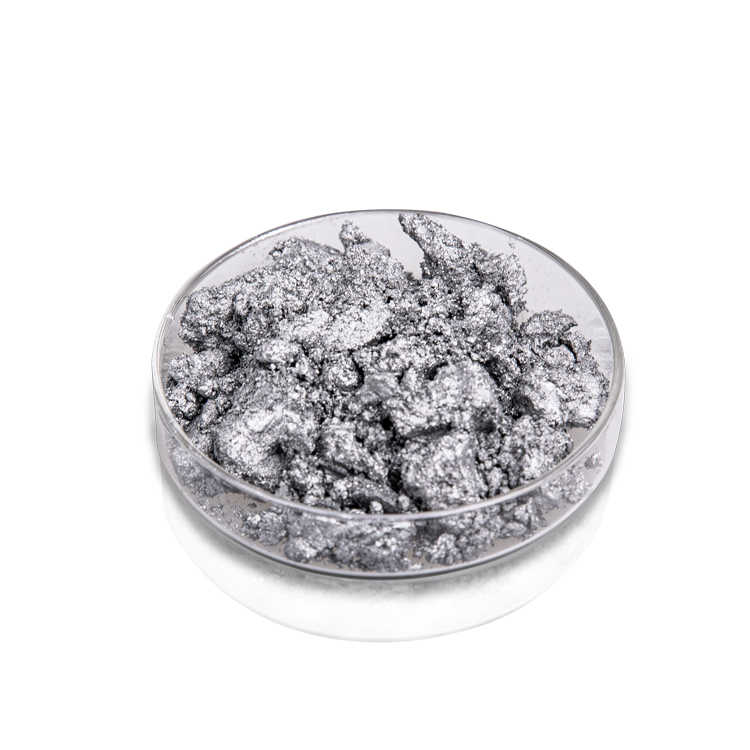
Metallic coatings rely heavily on aluminium paste to deliver brightness, coverage, and protective performance.
However, not all aluminium paste behaves the same once applied.
The key distinction lies between leafing aluminium paste and non-leafing aluminium paste.
Understanding how aluminium flakes orient within the coating film is essential for selecting the right pigment for automotive, industrial, and anti-corrosion applications.
Leafing Aluminium Paste: The “Floating Flake” Mechanism
How Leafing Behaviour Works
Leafing aluminium paste is designed so that aluminium flakes migrate toward the coating surface during drying.
This behavior is driven by:
-
Hydrophobic surface treatment on aluminium flakes
-
Lower surface energy compared to the binder
-
Natural alignment parallel to the coating surface
As a result, flakes form a dense metallic layer at the top of the film, often described as a “floating” or “leafing” structure.
Visual and Functional Characteristics
Leafing aluminium paste typically provides:
-
Very high metallic brightness
-
Strong mirror-like reflection
-
Excellent hiding power at low dosage
Because most flakes concentrate near the surface, leafing systems are often chosen where visual impact is the primary requirement.
Non-Leafing Aluminium Paste: Uniform Flake Distribution
Controlled Dispersion Inside the Film
In contrast, non-leafing aluminium paste is formulated so that flakes remain evenly distributed throughout the coating film.
This is achieved through:
-
Surface treatments compatible with the binder system
-
Improved wetting and dispersion
-
Reduced flake migration during curing
The result is a homogeneous metallic structure rather than a surface-concentrated layer.
Performance Advantages of Non-Leafing Systems
Non-leafing aluminium paste is valued for:
-
Consistent appearance across the entire coating thickness
-
Better compatibility with topcoats and clear coats
-
Improved durability and mechanical resistance
These properties make nonleafing aluminium paste particularly suitable for functional and protective coatings.
Application Differences Across Industries
Automotive Coatings
In automotive applications:
-
Non-leafing aluminium paste is commonly used in basecoats
-
Ensures uniform metallic appearance from different viewing angles
-
Supports long-term appearance stability under weather exposure
Leafing types are occasionally used for decorative accents but are less common in OEM automotive systems.
Industrial and Anti-Corrosion Coatings
For industrial and protective coatings:
-
Non-leafing aluminium paste contributes to barrier protection
-
Flakes form a layered structure that slows moisture and oxygen penetration
-
Enhances corrosion resistance in harsh environments
Leafing aluminium paste may still be used where brightness is prioritized over long-term protection.
Performance Comparison: Leafing vs Non-Leafing Aluminium Paste
| Performance Aspect | Leafing Aluminium Paste | Non-Leafing Aluminium Paste |
| Metallic brightness | Very high | High |
| Surface reflection | Strong mirror effect | Moderate, uniform |
| Opacity / hiding | Excellent | Good |
| Corrosion protection | Limited | Strong |
| Compatibility with topcoats | Lower | Higher |
| Typical applications | Decorative, visual effects | Automotive, industrial, protective |
This comparison highlights why flake orientation is the defining factor in aluminium paste selection.
Choosing the Right Aluminium Paste
Selection should be based on application priorities:
-
Choose leafing aluminium paste when maximum brightness and visual impact are required
-
Choose non-leafing aluminium paste when durability, protection, and coating system compatibility are critical
Understanding these differences helps formulators avoid performance trade-offs in real-world applications.
Conclusion: Flake Orientation Defines Performance
Leafing and non-leafing aluminium paste are not interchangeable materials.
They represent two distinct performance strategies shaped by flake orientation and surface chemistry.
By aligning aluminium paste type with application requirements, coating systems can achieve the desired balance between appearance, durability, and functional protection.