Water-Based Coating Aluminium Paste: Challenges, Optimization and Supply
2026 / 04 / 01As global environmental regulations become stricter, the coatings industry is accelerating its shift toward water-based systems. According to industry reports from global coating associations, water-based coatings now account for over 55% of architectural coatings and are rapidly expanding in industrial applications.
However, formulating stable and high-performance aluminium paste for water-based coatings remains technically challenging.
Unlike solvent-based systems, water-based coatings introduce risks such as:
- Hydrogen gas release
- Corrosion instability
- Poor metallic alignment
- Reduced brightness
Therefore, selecting the right aluminium paste for water-based coatings is critical for coating manufacturers seeking durability, safety, and sustainability.
This article provides a structured technical guide to understanding how aluminium paste performs in water-based systems and how to select a reliable manufacturer for long-term supply.
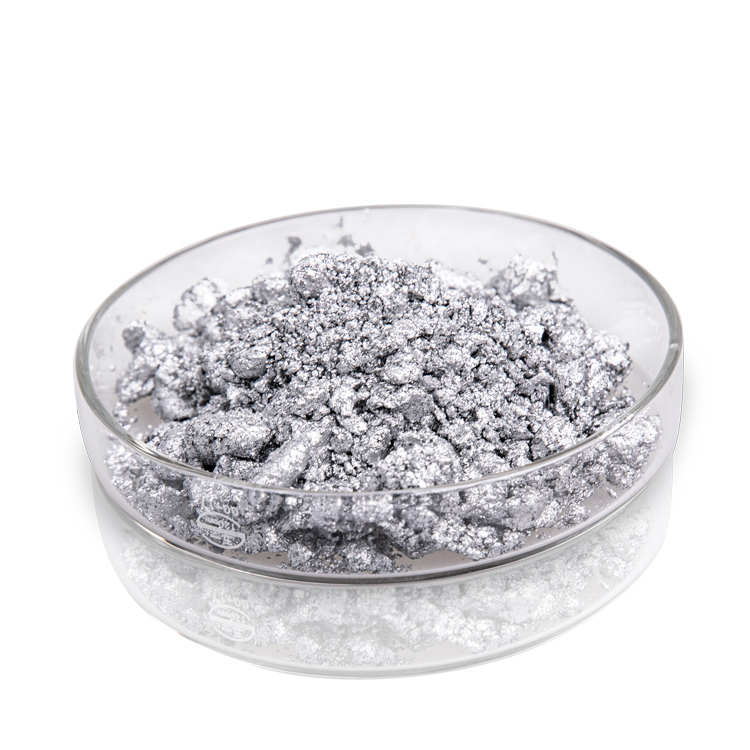
First: Why Water-Based Systems Create Technical Challenges for Aluminium Paste
Aluminium is a reactive metal. In water-based environments, improper surface treatment may lead to:
- Gas generation (hydrogen evolution)
- Loss of metallic brightness
- Film defects
- Reduced corrosion resistance
Step One: Chemical Stability in Aqueous Systems
To prevent unwanted reactions, aluminium paste for water-based coatings must undergo special surface treatment.
This includes:
- Inorganic coating layers
- Organic encapsulation technology
- Corrosion-inhibiting additives
Proper surface engineering ensures aluminium paste remains stable during storage and application.
Step Two: Controlled Particle Alignment
Metallic effect depends on flake alignment.
In water-based systems:
- Surface tension differs from solvent systems
- Dispersion characteristics change
- Rheology affects metallic orientation
Advanced aluminium paste manufacturing ensures controlled particle size distribution and surface smoothness to improve alignment.
Second: Key Performance Indicators of Aluminium Paste for Water-Based Coatings
When evaluating aluminium paste for water-based coatings, consider measurable parameters:
1. Gas Release Performance
High-quality aluminium paste must demonstrate:
- Low hydrogen evolution rate
- Stable storage behavior
- Long-term dispersion safety
2. Particle Size Distribution
Fine particles provide:
- Smooth metallic finish
- Better film leveling
Coarser particles enhance:
- Barrier effect
- Reflectivity
3. Surface Treatment Technology
Surface treatment determines:
- Water resistance
- Oxidation resistance
- Compatibility with acrylic, polyurethane, and epoxy systems
Professional aluminium paste manufacturers invest heavily in R&D to optimize these characteristics.
Third: Application Areas of Aluminium Paste for Water-Based Coatings
The demand for aluminium paste in water-based systems is increasing across industries.
Architectural Coatings
Used for:
- Metallic wall finishes
- Decorative panels
- Exterior reflective paints
Benefits include:
- Reduced VOC emissions
- Improved environmental compliance
Industrial Equipment Coatings
Water-based industrial coatings require:
- Stable metallic dispersion
- Strong corrosion resistance
- Durable film formation
Automotive Components
Water-based coatings are increasingly used in:
- Automotive refinish systems
- Plastic parts finishing
- Eco-friendly OEM production lines
In these applications, aluminium paste must provide both aesthetic effect and technical durability.
Fourth: Manufacturing Expertise Matters (EEAT – Experience & Expertise)
Producing aluminium paste for water-based coatings requires advanced technical capability.
A qualified aluminium paste manufacturer must have:
First, controlled milling technology
Second, specialized surface treatment processes
Third, laboratory testing for hydrogen evolution
Fourth, long-term formulation experience
With decades of manufacturing expertise and multiple production facilities, large-scale metallic pigment manufacturers ensure batch-to-batch consistency.
Manufacturers exporting to over 60 countries demonstrate global market validation and compliance capability.
Fifth: Customization for Water-Based Formulations
Not all water-based coatings are identical.
Different resin systems require tailored aluminium paste solutions.
Acrylic Systems
Need:
- Fine particle size
- Stable dispersion
- Enhanced brightness
Epoxy Water-Based Systems
Require:
- Strong corrosion resistance
- Stable flake orientation
Polyurethane Water-Based Coatings
Demand:
- High reflectivity
- Weather durability
Professional aluminium paste manufacturers provide customized solutions including:
- Particle size adjustment
- Solid content optimization
- Surface treatment modification
- Leafing and non-leafing options
Customization reduces reformulation costs and improves coating performance.
Sixth: Supply Chain Stability for Sustainable Production
Water-based coating manufacturers operate under strict production schedules.
Reliable aluminium paste supply requires:
- Multiple manufacturing bases
- Stable raw material sourcing
- Large production capacity
- Efficient global logistics
Factory-direct aluminium paste suppliers provide:
- Competitive wholesale pricing
- Bulk order flexibility
- Stable long-term contracts
Eliminating intermediary channels improves communication and cost efficiency.
Seventh: Case Study – Water-Based Industrial Coating Manufacturer
Background
A European water-based coating producer required aluminium paste with low hydrogen release and stable brightness.
Problem
Previous supplier caused storage instability and inconsistent metallic finish.
Solution
Step One: Optimized surface encapsulation
Step Two: Improved particle size control
Step Three: Strict gas evolution testing
Results
- Reduced gas formation risk
- Improved storage stability
- Enhanced metallic uniformity
- Increased customer production efficiency
This demonstrates how specialized aluminium paste for water-based coatings directly improves product reliability.
Eighth: Sustainability and Future Trends
The global coatings industry is moving toward:
- Low-VOC formulations
- Water-based dominance
- Energy-efficient reflective coatings
- Reduced environmental footprint
Aluminium paste for water-based coatings plays a key role in sustainable product development.
Manufacturers investing in R&D, environmental compliance, and advanced surface treatment technology will lead the next stage of metallic pigment innovation.
Conclusion: How to Choose the Right Aluminium Paste for Water-Based Coatings
When selecting aluminium paste for water-based coatings, evaluate:
First, chemical stability
Second, particle size distribution
Third, surface treatment technology
Fourth, customization capability
Fifth, supply chain reliability
Sixth, wholesale pricing transparency
Aluminium paste is not just a decorative pigment — it is a functional performance material in modern water-based coating systems.
Working with an experienced aluminium paste manufacturer ensures:
✔ Stable bulk supply
✔ Consistent quality control
✔ Custom technical solutions
✔ Competitive wholesale pricing
✔ Global export reliability