Aluminum Paste for Printing Ink: Enhancing Metallic Effects in Modern Packaging
2026 / 03 / 25In recent years, the global packaging and printing industry has undergone rapid transformation, driven by premium branding, e-commerce growth, and consumer demand for high-end visual effects. As a result, search demand for metallic pigment for printing ink and aluminum paste for ink continues to rise.
Industry data shows that the global printing ink market is expected to exceed USD 25 billion by 2027, with metallic inks becoming a key growth segment due to their ability to enhance shelf appeal and product differentiation. In particular, aluminum paste for ink plays a central role in achieving high-gloss, reflective, and eye-catching finishes.
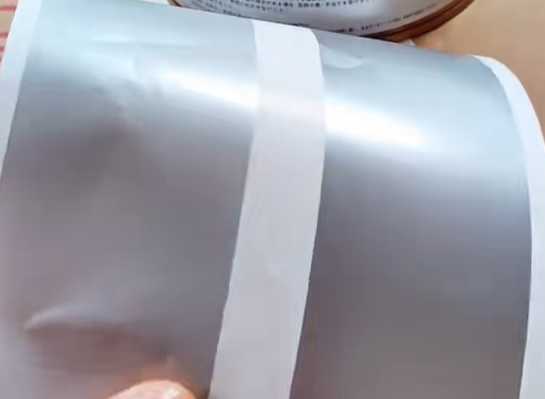
First: Printing Industry Demand for Aluminum Paste for Ink
1. Premium Packaging Drives Metallic Effects
Modern packaging—especially in sectors like cosmetics, food, beverages, and electronics—relies heavily on visual impact. Aluminum paste for printing ink enables:
- Bright metallic finishes
- High reflectivity for branding
- Luxury appearance on labels and flexible packaging
This makes metallic pigment for printing ink essential for:
- Gravure printing
- Flexographic printing
- Screen printing
2. Functional Requirements in Printing Applications
Printing inks require more than just appearance. High-quality aluminum paste for ink must meet strict technical standards:
| Requirement | Importance in Printing Ink |
|---|---|
| Dispersion Stability | Prevents uneven printing |
| Particle Size Control | Ensures smooth printing |
| Adhesion | Improves substrate bonding |
| Oxidation Resistance | Maintains long-term gloss |
3. Growth in Flexible Packaging
Flexible packaging is one of the fastest-growing segments, especially in Asia, Europe, and South America. This trend significantly increases demand for:
- Fine aluminum pigment particles
- Stable metallic pigment for printing ink
- Environmentally friendly ink systems
Second: Water-Based vs Solvent-Based Aluminum Paste for Ink
Choosing between water-based and solvent-based systems is a key decision when selecting aluminum paste for ink.
1. Water-Based Aluminum Paste for Ink
Characteristics:
- Low VOC emissions
- Environmentally friendly
- Increasingly used in regulated markets
Advantages:
- Meets environmental regulations
- Safer for workers
- Suitable for food packaging applications
Challenges:
- Requires surface-treated aluminum pigment
- Higher technical requirements for dispersion stability
2. Solvent-Based Aluminum Paste for Ink
Characteristics:
- Traditional and widely used
- Strong compatibility with existing systems
Advantages:
- Excellent dispersion
- Strong metallic effect
- Easier processing
Challenges:
- Higher VOC emissions
- Regulatory pressure in some regions
3. Comparison Table
| Feature | Water-Based Aluminum Paste | Solvent-Based Aluminum Paste |
|---|---|---|
| Environmental Impact | Low VOC | Higher VOC |
| Metallic Effect | Medium to High | High |
| Processing Difficulty | Higher | Lower |
| Regulatory Compliance | Strong | Moderate |
4. Step-by-Step Selection Guide
Step One: Identify Regulatory Requirements
- Food packaging or eco-compliance needed? → choose water-based
Step Two: Evaluate Printing Process
- Gravure or flexo printing compatibility
Step Three: Balance Performance vs Cost
- Solvent-based for cost efficiency
- Water-based for sustainability
Third: Customized Aluminum Paste Solutions for Printing Ink
As printing applications become more specialized, demand for customized aluminum paste for ink is rapidly increasing.
1. Customization Parameters
Manufacturers can tailor metallic pigment for printing ink based on:
- Particle size (fine to coarse)
- Surface treatment (coated vs uncoated)
- Leafing vs non-leafing behavior
- Solvent compatibility
2. Step-by-Step Customization Process
Step One: Application Analysis
- Substrate type (plastic, paper, foil)
- Printing method (gravure, flexo, screen)
Step Two: Performance Requirements
- Gloss level
- Metallic brightness
- Durability
Step Three: Laboratory Testing
- Ink formulation compatibility
- Printing performance validation
Step Four: Scale-Up Production
- Stable batch production
- Consistent quality control
3. Real Application Case
A packaging company producing premium cosmetic labels required:
- High-gloss aluminum paste for ink
- Smooth printing without clogging
- Compatibility with flexible films
Solution:
A fine-particle, surface-treated metallic pigment for printing ink was selected and optimized for gravure printing.
Results:
- 25% improvement in print smoothness
- Enhanced metallic brightness
- Reduced printing defects
Fourth: Key Technical Trends in Aluminum Paste for Ink
1. Shift Toward Eco-Friendly Ink Systems
Demand for water-based aluminum paste is increasing due to global environmental regulations.
2. Ultra-Fine Particle Technology
Finer aluminum pigments improve:
- Print resolution
- Ink stability
- Surface smoothness
3. Surface-Coated Aluminum Pigments
Advanced coatings improve:
- Oxidation resistance
- Shelf life
- Ink compatibility
Fifth: Procurement Tips for Buyers
First: Focus on Dispersion Quality
Poor dispersion leads to printing defects and uneven metallic effects.
Second: Match Aluminum Paste to Printing Method
Different processes require different particle sizes and treatments.
Third: Test in Real Printing Conditions
Lab results must be verified in actual production lines.
Fourth: Consider Long-Term Stability
Stable aluminum paste for ink ensures consistent print quality over time.
Conclusion: Choosing the Right Aluminum Paste for Printing Ink
Selecting the right aluminum paste for ink or metallic pigment for printing ink is critical for achieving both visual excellence and production efficiency.
A well-matched aluminum pigment solution can deliver:
- Superior metallic effects
- Stable printing performance
- Reduced production costs
- Compliance with environmental standards
Call to Action
If you are looking to improve your printing ink performance with high-quality aluminum paste for ink or metallic pigment for printing ink, start by testing the right solution for your application.
© Copyright 2017 zhangqiu metallic pigment co.,ltd. All rights reserved.
Technical Support:ZHIDIAN