High-Performance Aluminum Paste for Coatings & Inks: Technical Insights & Market Trends
2026 / 04 / 13Aluminum paste plays a critical role in modern coatings and printing inks by delivering metallic brilliance, corrosion protection, and barrier performance. As global industries move toward higher durability standards and environmentally compliant formulations, aluminum paste technology continues to evolve.
According to data from multiple industry research institutions, the global metallic pigment market is projected to grow steadily, driven by demand in automotive coatings, protective industrial coatings, packaging inks, and electronics housing. Aluminum paste remains one of the most widely used metallic pigments due to its balance of cost efficiency and performance.
This article provides a structured technical analysis of aluminum paste performance, application systems, formulation strategies, and future development directions—aligned with current SEO best practices and technical search intent.
1. What Is Aluminum Paste and Why Is It Important?
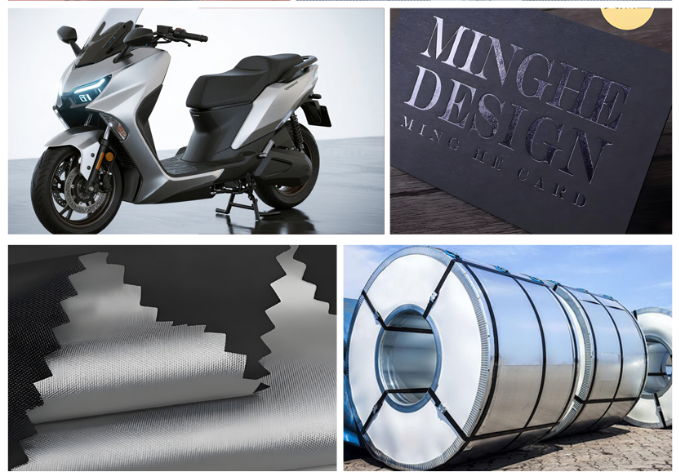
Aluminum paste is a metallic pigment composed of finely milled aluminum flakes suspended in solvent or water-based carriers. Its flake structure allows it to reflect light efficiently, creating a metallic finish while forming a protective barrier layer.
Key Functional Benefits:
- Metallic decorative effect
- Anti-corrosion barrier performance
- Heat reflectivity
- Chemical resistance improvement
- UV shielding capability
Because of its dual decorative and functional characteristics, aluminum paste is widely applied across multiple industrial sectors.
2. Types of Aluminum Paste and Their Applications
Understanding aluminum paste classification is essential for proper selection.
1) Leafing Aluminum Paste
Leafing aluminum paste floats to the coating surface and forms a bright metallic layer.
Typical applications:
- Protective industrial coatings
- Roof coatings
- Marine coatings
- Aerosol paints
Advantages:
- High brightness
- Excellent barrier protection
- Strong corrosion resistance
2) Non-Leafing Aluminum Paste
Non-leafing aluminum paste distributes evenly throughout the coating film.
Typical applications:
- Automotive coatings
- Printing inks
- Plastic coatings
- Electronics housings
Advantages:
- Better adhesion
- Uniform metallic appearance
- Suitable for clear coat systems
Selecting the correct aluminum paste type significantly impacts final coating performance.
3. Technical Factors Influencing Aluminum Paste Performance
Several technical parameters determine aluminum paste quality:
1) Particle Size Distribution
Finer particles provide smoother finishes but lower brightness.
Coarser flakes enhance sparkle but may affect smoothness.
2) Flake Shape and Aspect Ratio
High aspect ratio flakes improve barrier protection and reflectivity.
3) Surface Treatment
Surface treatment determines compatibility with solvent-based or water-based systems.
4) Solid Content
Higher aluminum content improves metallic intensity but requires precise dispersion control.
Proper evaluation of these parameters ensures consistent coating performance.
4. Aluminum Paste for Coatings
Aluminum paste for coatings is extensively used in:
- Industrial anti-corrosion coatings
- Steel structure coatings
- Pipeline protection systems
- Machinery surface finishing
Studies show that aluminum flake orientation significantly reduces water vapor transmission rates in protective coatings. This improves long-term durability and corrosion resistance.
In industrial environments, coatings containing aluminum paste can extend substrate lifespan by forming a physical metallic shield.
5. Aluminum Paste for Ink Applications
Aluminum paste for ink is widely applied in:
- Gravure printing
- Flexographic printing
- Packaging materials
- Decorative labels
In printing systems, aluminum paste must meet:
- Fine dispersion standards
- Stable viscosity requirements
- High gloss performance
- Low sedimentation risk
Water-based ink systems require specially treated aluminum paste to prevent hydrogen reaction and ensure safe processing.
6. Common Challenges and Solutions
Challenge 1: Poor Dispersion
Solution:
- Use proper wetting agents
- Add aluminum paste during final mixing
- Avoid excessive shear force
Challenge 2: Sedimentation
Solution:
- Optimize viscosity
- Use anti-settling additives
- Maintain stable storage conditions
Challenge 3: Surface Defects
Solution:
- Control coating thickness
- Optimize solvent balance
- Ensure uniform flake orientation
Technical support and formulation optimization are key to resolving these issues.
7. Market Trends Driving Aluminum Paste Demand
- Growth in infrastructure development
- Expansion of automotive production
- Rising demand for premium packaging
- Increasing adoption of waterborne coatings
- Stricter environmental regulations
Metallic finishes continue to gain popularity in both industrial and decorative applications. Aluminum paste remains the preferred metallic pigment due to its cost-performance ratio compared to alternatives like vacuum metallized pigments.
8. Supply Chain Stability and Customization Capability
In global procurement, aluminum paste buyers prioritize:
- Stable production capacity
- Consistent batch quality
- Flexible customization
- Competitive wholesale pricing
- Reliable international logistics
Manufacturers with multiple production bases and dedicated R&D teams can provide:
- Custom particle size control
- Tailored surface treatments
- Waterborne-specific grades
- Ink-grade fine aluminum paste
- Bulk industrial supply solutions
Stable supply chain management ensures uninterrupted industrial production cycles.
9. Certifications and Quality Control
High-quality aluminum paste suppliers typically implement:
- Strict raw material inspection
- Controlled milling processes
- Batch traceability systems
- International quality management certifications
Consistent quality control enhances trust in global partnerships and long-term procurement contracts.
Conclusion
Aluminum paste remains a cornerstone material in coatings and ink industries due to its decorative brilliance and protective performance.
To maximize performance, buyers should evaluate:
- Application system compatibility
- Leafing vs non-leafing requirements
- Particle size and flake structure
- Surface treatment type
- Supplier production stability
As industrial standards continue to rise, selecting technically advanced aluminum paste becomes a strategic decision rather than a simple material purchase.
For technical data sheets, customization options, or bulk aluminum paste inquiries, contact a professional metallic pigment supplier to discuss your application requirements and obtain tailored solutions.