How to Choose an Aluminium Paste Manufacturer in China
2026 / 11 / 13Finding a reliable aluminium paste manufacturer is an important step for coating and printing ink producers looking for consistent metallic pigment performance and a stable supply of raw materials.
China has become an important sourcing destination for metallic pigments. However, choosing the right supplier involves more than comparing quotations. Buyers need to evaluate product specifications, application suitability, quality management, technical support, and the manufacturer's ability to meet long-term purchasing requirements.
If you are sourcing aluminium paste from China, this guide explains what to check before selecting a manufacturer.
1. Confirm That the Supplier Is an Aluminium Paste Manufacturer
The first step is to understand whether you are dealing directly with a manufacturer, a trading company, or a distributor.
A direct aluminium paste manufacturer may provide more detailed information about its product grades, production processes, technical specifications, and quality control procedures.
When evaluating a potential supplier, ask:
-
Does the company manufacture aluminium paste or mainly distribute products?
-
Can it provide product-specific technical data sheets (TDS)?
-
Does it offer different grades for coating and printing ink applications?
-
Can its technical team discuss formulation and application requirements?
-
Can it provide consistent product specifications for repeat orders?
Company information, product documentation, and direct technical communication can help buyers understand the supplier's actual capabilities.
2. Check the Available Aluminium Paste Product Grades
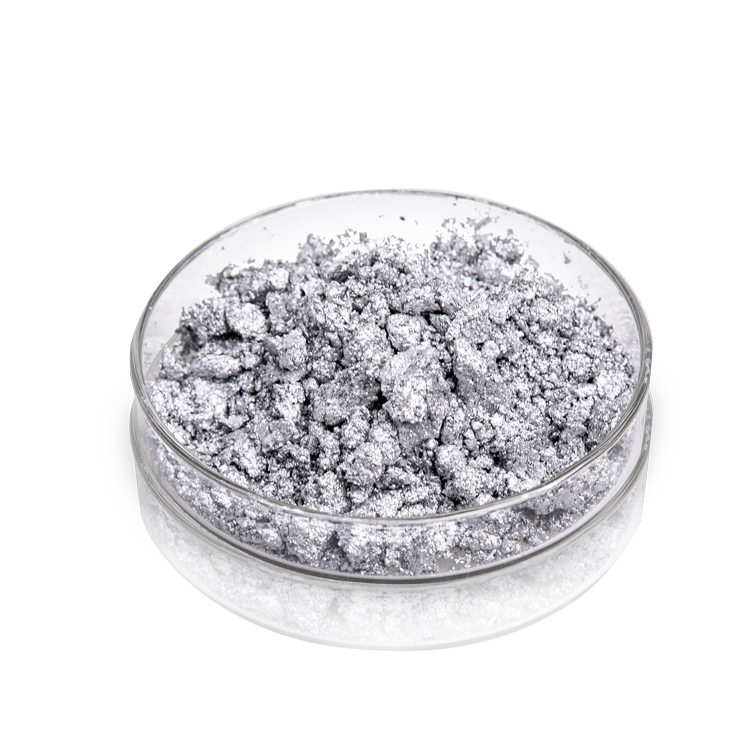
Different coating and ink formulations require different aluminium paste characteristics. A suitable manufacturer should be able to help buyers identify grades according to their application requirements.
Common product categories include:
| Aluminium paste type | Typical selection consideration |
| Leafing aluminium paste | Surface-oriented metallic effect and application requirements |
| Non-leafing aluminium paste | Metallic pigment distribution within the coating film |
| High-brightness aluminium paste | Strong silver appearance and brightness requirements |
| Fine-particle aluminium paste | Particle size and surface finish requirements |
| Water-based aluminium paste | Compatibility with water-based formulation systems |
| Resin-coated aluminium paste | Surface treatment and formulation compatibility |
These categories are not interchangeable. The appropriate grade depends on the binder, carrier system, processing conditions, and required coating performance.
Before requesting a quotation, identify your target application and the type of metallic effect you need.
3. Evaluate Technical Specifications Before Purchasing
A professional aluminium paste supplier should provide clear technical information for the proposed product grade.
Important parameters may include:
Particle size distribution
Particle size influences the visual appearance and surface characteristics of metallic coatings. Buyers should check the specified particle size range and test method rather than relying on descriptions such as fine or coarse alone.
Non-volatile content
This parameter indicates the proportion of non-volatile material in the product and helps formulators calculate the required addition level.
Carrier or solvent system
The carrier system should be suitable for the intended resin and formulation. Compatibility should be confirmed through laboratory testing.
Product appearance
Color tone, metallic brightness, and visual consistency should be evaluated against the customer's requirements.
Recommended application
The supplier should provide relevant guidance on intended applications, handling, and processing.
A technical data sheet is a useful starting point, but actual formulation testing is still necessary before approving a new grade.
4. Verify Quality Control and Batch Consistency
For coating manufacturers, consistent raw material quality is essential for maintaining stable production and finished-product appearance.
A potential aluminium paste manufacturer should be able to explain how product specifications are monitored and how production batches are identified.
Before placing a bulk order, consider checking:
-
Whether product specifications are documented.
-
Whether batch numbers and relevant quality records are available.
-
Whether the supplier can provide batch-specific documentation.
-
Whether sample results can be compared with subsequent production batches.
-
Whether there is a process for handling quality complaints and product deviations.
For long-term purchasing, evaluating more than one production batch can provide a better understanding of product consistency.
5. Request Samples and Conduct Application Testing
A sample is an important part of supplier evaluation. However, testing should be carried out under controlled conditions.
Before requesting aluminium paste samples, prepare the following information:
-
Intended application, such as industrial coatings, automotive coatings, or printing inks.
-
Existing resin and solvent system, where applicable.
-
Target metallic appearance and particle size requirements.
-
Preferred product type, such as leafing or non-leafing.
-
Relevant application and performance requirements.
When comparing samples, use consistent formulation ratios, mixing procedures, substrates, application conditions, and film thickness wherever appropriate.
Evaluate the resulting coating or ink for appearance, dispersion, compatibility, and application performance.
A laboratory sample test should be followed by a production trial when required by the application.
6. Compare Supply Capability and Communication
A supplier's suitability should also be evaluated beyond the laboratory.
For international buyers, important purchasing considerations include:
-
Ability to support the required order quantity.
-
Clear product identification and packaging information.
-
Availability of relevant technical and safety documentation.
-
Communication efficiency during sample evaluation and quotation.
-
Agreed production and delivery schedules.
-
Ability to support repeat orders.
A reliable supply relationship requires clear communication between the manufacturer and the buyer, especially when product specifications or order requirements change.
7. Questions to Ask Before Choosing an Aluminium Paste Supplier
Before approving a new supplier, buyers can use this checklist:
|
||||||||||||||||||
|---|---|---|---|---|---|---|---|---|---|---|---|---|---|---|---|---|---|---|
Providing clear answers to these questions makes supplier comparisons more practical and reduces uncertainty before purchasing.
- Previous:Aluminium Paste Manufacturer in China: How to Choose a Reliable Supplier
- Next:I have no