Aluminium Paste for Automotive Coatings: A Guide for Paint Manufacturers
2026 / 09 / 18In automotive coatings, metallic luster is closely linked to the choice and application of aluminum pigments.
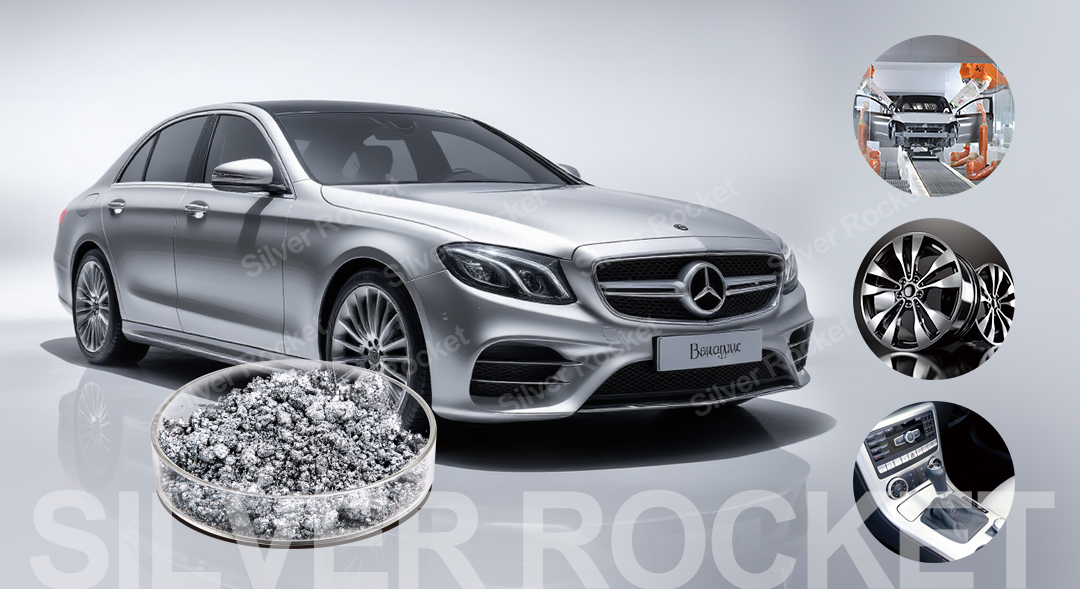
Why is aluminum paste used in automotive basecoats?
As a metallic pigment, aluminum paste is widely used in automotive coatings to create silver, metallic, and special-effect finishes. When aluminum flakes are evenly distributed and correctly oriented within the coating, they reflect light, producing the distinctive metallic luster required for automotive finishes.
Manufacturers of automotive coatings using aluminum paste should select the appropriate pigment grade based on the desired appearance and the specific formulation system.
Key performance factors include:
- Metallic luster and visual uniformity
- Particle size distribution
- Flake orientation
- Color consistency
- Dispersion properties
- Compatibility with resin and solvent systems
- Surface appearance after application
- Batch-to-batch stability
The right aluminum pigment helps coating manufacturers achieve consistent appearance while maintaining efficient production.
Key factors in selecting aluminum paste for automotive basecoats
1. Particle size distribution
Particle size directly affects the appearance of metallic automotive coatings.
Finer aluminum flakes provide a smoother, more uniform metallic look, whereas larger flakes create a stronger sparkle effect and greater visual impact. However, the appropriate particle size depends on the target color, coating system, application method, and desired surface finish.
Therefore, coating manufacturers should select automotive aluminum paste based on the final coating requirements, rather than considering particle size alone.
2. Metallic luster and gloss
Gloss is one of the most prominent characteristics of metallic automotive coatings.
However, automotive coatings are typically evaluated from various viewing angles. For metallic paints, the difference in appearance between direct viewing and off-angle (flop) viewing is crucial.
The shape, particle size distribution, and orientation of aluminum flakes within the coating film influence:
- Surface brightness
- Flop effect (color travel)
- Metallic depth
- Sparkle effect
- Color appearance
Consequently, aluminum pastes intended for automotive coatings should be evaluated under actual formulation and application conditions prior to mass production.
3. Dispersion properties
Even if the aluminum pigment itself possesses excellent optical properties, poor dispersion can negatively impact the appearance of the final coating.
Agglomeration or uneven distribution of aluminum flakes can lead to:
- Non-uniform metallic appearance
- Reduced brightness
- Color shifts
- Surface defects
- Batch-to-batch inconsistency
Therefore, coating manufacturers should consider the compatibility between the aluminum paste, resins, solvents, and other formulation components.
Controlling mixing conditions is also crucial. Excessive shear or unsuitable dispersion processes can affect the morphology of the aluminum flakes, ultimately altering the appearance of the finished coating.
Selecting Aluminum Paste for Various Automotive Coating Applications
Not all automotive coatings require the same aluminum pigment properties.
Automotive OEM Basecoats
OEM basecoats typically require stable metallic luster, consistent color, and reliable production performance. The choice of aluminum paste should be based on the formulation, application equipment, and target color.
Automotive Refinish Coatings
For automotive refinish applications, appearance matching is particularly important. Aluminum pigments must provide a consistent metallic effect while meeting color-matching and repair requirements.
Wheel Rims and Metal Components
Aluminum pigments are also used in coatings for wheel rims and other automotive components. In these applications, manufacturers may prioritize metallic luster, durability, and compatibility with protective coating systems.
Aluminum Paste for Automotive Coatings: What Should Manufacturers Test?
Before purchasing aluminum paste in bulk, coating manufacturers should conduct application tests using their own coating formulations.
Practical evaluations may include:
| Evaluation Item | What to Check |
|---|---|
| Particle Size | Compliance with the desired metallic appearance |
| Brightness | Assessment of surface and angular appearance |
| Flip-flop | Checking for color and brightness changes at different viewing angles |
| Dispersibility | Checking for uniformity after mixing |
| Compatibility | Assessing interaction with the coating system |
| Storage stability | Check product stability during storage |
| Color consistency | Compare different production batches |
| Application performance | Test with actual spraying or coating conditions |
Laboratory testing should be followed by production-scale trials before confirming a large-volume order.
Why Batch Consistency Matters for Automotive Aluminum Paste
Automotive coatings require a high level of color and appearance consistency. Even relatively small differences in aluminum pigment characteristics can influence the final metallic effect.
For paint manufacturers purchasing aluminum paste for automotive basecoat, supplier evaluation should therefore include not only the appearance of one sample but also production consistency, quality control and supply capability.
Important supplier information may include:
- Technical data sheet
- Certificate of Analysis (COA)
- Particle size information
- Recommended dosage
- Application recommendations
- Sample availability
- Batch consistency data
- Production capacity
- technical support
A reliable supply chain can help manufacturers reduce formulation adjustments and maintain consistent coating quality during continuous production.
How ZQ Metallic Pigment Supports Automotive Coating Manufacturers
ZQ Metallic Pigment supplies aluminum paste and other metallic pigments for coating manufacturing applications. With more than 39 years of manufacturing experience, six plants and dedicated R&D technicians, the company supports customers with product selection, application testing and technical assistance.
For automotive coating manufacturers, product selection can be based on factors such as:
- Desired metallic appearance
- Particle size requirements
- Leafing or non-leafing characteristics
- Coating formulation
- Application method
- Brightness and flop requirements
- Production volume
Samples can be evaluated before bulk purchasing to help customers identify a suitable aluminum paste grade for their specific automotive coating system.
Conclusion
Choosing the right aluminum paste for automotive basecoat requires more than comparing silver brightness. Particle size distribution, flake orientation, dispersion, compatibility, appearance and batch consistency all influence the final performance of automotive metallic coatings.
For manufacturers developing aluminum paste for automotive paint or other automotive coating formulations, application testing is an important step before selecting a grade for continuous production.
By evaluating aluminum paste under actual formulation and application conditions, paint manufacturers can make a more informed choice and improve the consistency of their metallic automotive finishes.
Looking for an aluminum paste for automotive basecoat?
Contact ZQ Metallic Pigment for product recommendations, samples and technical support.
Learn how to choose aluminium paste for automotive basecoat, including particle size, brightness, flop, dispersion and batch consistency for automotive coatings.