Step-by-Step Guide to Aluminum Paste Production
2026 / 01 / 23
Why Aluminum Paste Production Matters
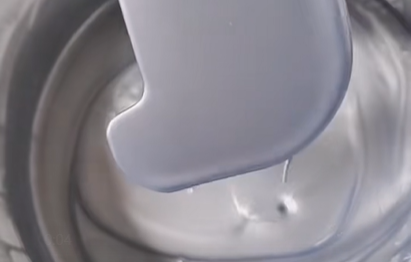
Aluminum paste is one of the most widely used metallic pigments in coatings, inks, plastics, and decorative applications. While many buyers focus on price or appearance, the real performance of aluminum paste is determined by how it is produced.
From raw aluminum purity to milling technology and surface treatment, each production step directly affects:
-
Metallic brightness
-
Coverage efficiency
-
Stability and storage life
-
Leafing or non-leafing behavior
-
Compatibility with different coating systems
For coating manufacturers, ink formulators, and industrial buyers, understanding the aluminum paste production process is essential when selecting a reliable aluminum paste manufacturer or metallic pigment factory.
This article provides a step-by-step explanation of aluminum paste production, highlighting key technologies, industry benchmarks, and quality control standards used by professional manufacturers such as ZQ Metallic Pigment.
Step One: Raw Aluminum Selection Standards
Purity Determines Performance
The production of high-quality aluminum paste begins with the careful selection of raw aluminum. Not all aluminum sources are suitable for pigment production.
Key selection criteria include:
-
High aluminum purity (≥99.7%)
-
Low iron and silicon impurities
-
Consistent chemical composition
-
Stable mechanical properties
Impurities can significantly reduce brightness, cause color deviation, and negatively affect corrosion resistance in finished coatings.
Raw Material Traceability
Professional aluminum paste manufacturers establish raw material traceability systems, ensuring each production batch can be traced back to its aluminum source. This is critical for maintaining batch consistency, especially for international customers with strict quality requirements.
Step Two: Milling and Flake Control Technology
Wet Milling Process Explained
Aluminum paste is typically produced using a wet ball milling process, where aluminum particles are milled into thin flakes in the presence of solvents and lubricants.
Key milling parameters include:
-
Milling time
-
Ball size and material
-
Rotation speed
-
Solvent composition
Each parameter influences flake morphology, particle size distribution, and metallic effect.
Flake Shape and Metallic Appearance
The characteristic metallic appearance of aluminum paste comes from its flake structure:
-
Thin, smooth flakes → higher brightness
-
Uniform flake size → consistent appearance
-
Controlled thickness → better coverage
Advanced milling technology allows precise control over flake thickness and diameter, ensuring stable optical performance.
Step Three: Surface Treatment & Stabilization
Why Surface Treatment Is Critical
Fresh aluminum flakes are highly reactive, especially in coating systems. Without proper surface treatment, aluminum paste may suffer from:
-
Oxidation
-
Gas generation
-
Poor storage stability
-
Incompatibility with resins
Surface treatment is therefore a core technology in aluminum paste production.
Common Surface Treatment Methods
Professional metallic pigment factories apply specialized treatments, such as:
-
Fatty acid coating
-
Polymer encapsulation
-
Inorganic passivation layers
These treatments improve:
-
Chemical stability
-
Shelf life
-
Resin compatibility
-
Safety during storage and transportation
Step Four: Quality Inspection & Batch Control
Particle Size Distribution Standards
Particle size distribution is a key performance indicator for aluminum paste.
Industry-standard parameters include:
-
D50: median particle size
-
D90: upper size limit controlling surface smoothness
Typical ranges may include:
-
D50: 8–25 μm (depending on application)
-
D90: tightly controlled to prevent surface defects
Strict particle size control ensures consistent appearance across batches.
Brightness and Coverage Benchmarks
High-performance aluminum paste is evaluated based on:
-
Reflectance values
-
Hiding power
-
Metallic orientation efficiency
Manufacturers use standardized test panels to measure brightness and coverage under controlled conditions.
Step Five: Customization for Different Industries
Leafing vs Non-Leafing Aluminum Paste
One of the most important classifications in aluminum paste production is leafing behavior.
| Parameter | Leafing Aluminum Paste | Non-Leafing Aluminum Paste |
|---|---|---|
| Flake orientation | Floats to surface | Evenly dispersed |
| Metallic effect | Mirror-like, high gloss | Soft, uniform metallic |
| Typical applications | Decorative paints, protective coatings | Automotive, industrial, inks |
| Surface treatment | Hydrophobic | Hydrophilic or resin-compatible |
Manufacturers customize formulations to match specific customer requirements.
Industry-Specific Customization
Different industries require different aluminum paste properties:
-
Architectural coatings: durability and weather resistance
-
Industrial coatings: corrosion resistance and coverage
-
Printing inks: fine particle size and smooth dispersion
-
Plastics: heat resistance and processing stability
Customization is a key value offered by experienced aluminum paste manufacturers.
Flow Chart: Aluminum Paste Manufacturing Process
Raw Aluminum Selection
↓
Wet Milling & Flake Formation
↓
Surface Treatment & Stabilization
↓
Particle Size Classification
↓
Quality Inspection & Batch Control
↓
Customized Packaging & Delivery
This standardized process ensures stable quality and repeatable performance.
Vertical Production Advantage of Professional Manufacturers
Manufacturer vs Trader
Choosing a direct aluminum paste manufacturer offers significant advantages over traders:
-
Full control over raw materials
-
Faster technical response
-
Stable batch consistency
-
Lower long-term procurement risk
Lead Time Reduction
Vertical integration allows manufacturers to:
-
Reduce production lead times
-
Adjust formulations quickly
-
Support urgent project requirements
For global buyers, this flexibility is often more valuable than short-term cost savings.
Sustainability and Safety Considerations
Modern aluminum paste production increasingly focuses on:
-
Low-VOC formulations
-
Safer solvent systems
-
Improved handling safety
-
Compliance with international regulations
Professional metallic pigment factories invest in cleaner production technologies to meet global environmental standards.
Conclusion: Choosing the Right Aluminum Paste Manufacturer
Aluminum paste production is a complex, multi-step process requiring technical expertise, strict quality control, and deep application knowledge.
From raw aluminum selection to flake control, surface treatment, and customization, each step directly influences the final pigment performance.
By working with an experienced aluminum paste manufacturer and metallic pigment factory like ZQ Metallic Pigment, buyers gain access to:
-
Stable, high-performance aluminum paste
-
Customized technical solutions
-
Reliable batch consistency
-
Long-term supply security