Why Does Aluminium Paste Settle or Layer? Experts Explain the Real Causes
2025 / 11 / 28Aluminum paste is widely used in coatings, inks, plastics, and industrial coatings. However, many manufacturers and users still face the problem of sedimentation and stratification, a common but easily misunderstood issue. As a leading manufacturer in Asia, Zhangqiu Metal Pigment Co., Ltd., based on materials science and nearly forty years of production experience, provides you with professional solutions.
Understanding Aluminium Paste: Core Principles
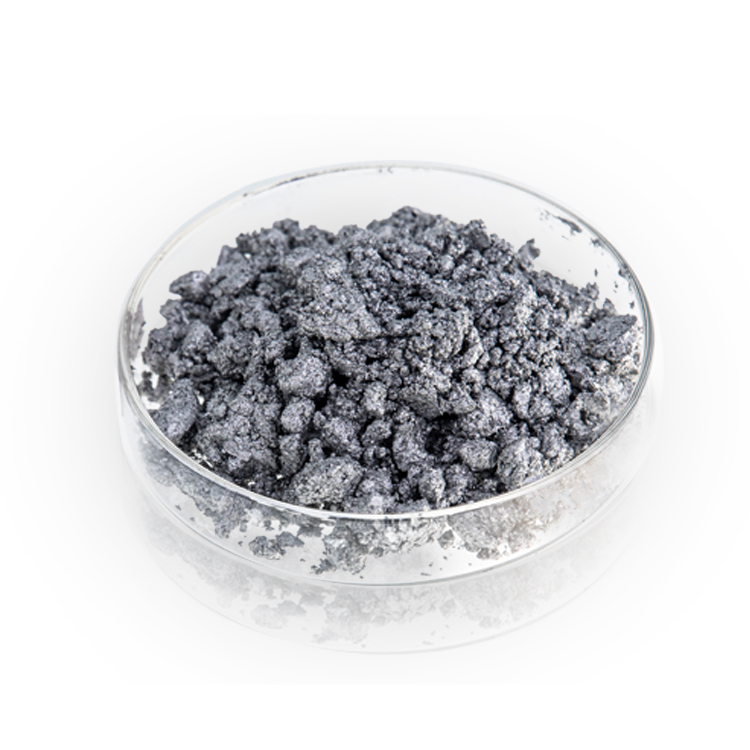
Aluminium paste is a mixture of aluminium flakes + solvent + additives. Its stability depends on flake density, solvent viscosity, particle size distribution, surface treatment, and storage conditions.
Even high-quality aluminium paste can settle, but controlled settling without hard sediment is acceptable. The real problem occurs when settling becomes hard, compact, or forms a clear liquid layer, affecting performance.
Typical Manifestations of Settling and Layering
1. Clear Liquid Layer on Top
You open the drum and see a bright solvent phase separated from the metallic portion.
2. Aluminium Flakes Accumulating at the Bottom
Soft sediment is normal; hard sediment indicates formulation or storage problems.
3. Viscosity Drop During Storage
Paste appears thinner because the heavy metallic phase has moved downward.
Why Aluminium Paste Settles: Main Scientific Reasons
1. Density Difference (Physical Law)
Aluminium has a density of 2.7 g/cm³, much heavier than organic solvents (~0.85 g/cm³).
This natural density difference causes downward movement over time.
2. Particle Size Distribution Issues
-
Large flakes settle faster
-
Small flakes stay suspended longer
An uneven distribution or excessively coarse particles accelerate layering.
3. Insufficient Surface Treatment
Untreated or poorly treated aluminium flakes may:
-
Lose compatibility with resin systems
-
React weakly with dispersing agents
-
Cause flocculation → faster settling
Resin-coated aluminium flakes have significantly improved stability.
4. Incompatible Resin or Solvent System
When aluminium paste enters a coating system, incompatibility causes:
-
Flocculation
-
Agglomeration
-
Density-driven separation
This is common in low-polarity or acidic environments.
5. Storage Conditions
Authoritative laboratory data from ASTM D2196 stability tests show:
High temperature accelerates sedimentation by 2–3×.
Key Factors Behind Settling: Expert Breakdown
Oil-Based vs Water-Based Systems
-
Oil-based coatings: Most aluminium paste applications; more stable.
-
Water-based coatings: Higher risk due to hydrogen reaction; must use water-based aluminium paste.
Leafing vs Non-Leafing Aluminium Paste
-
Leafing: Flakes float closer to the surface → slower settling
-
Non-leafing: Disperse throughout system → more sedimentation risk
Most industrial coatings use non-leafing, so settling is unavoidable.
Coated vs Uncoated Aluminium Paste
-
Uncoated (standard): More settling, weaker chemical stability
-
Resin-coated or silica-coated: Better suspension, better oxidation resistance, lower hydrogen risk
Applications & Comparative Insights
How Different Industries Manage Settling
| Industry | Aluminium Paste Performance Focus | Stability Requirement |
| Automotive coatings | brightness + metallic effect | very high |
| Industrial paints | coverage + stability | high |
| Inks | fine particle control | extremely high |
| Powder coatings | flake orientation | medium–high |
Key Insight
According to industry reports from the Asia-Pacific Coatings Journal, demand for high-stability aluminium paste grew over 12% in 2024, mainly due to stricter quality standards.
FAQ — Common Questions About Aluminium Paste Settling
Q1: Is settling normal?
Yes. Aluminium paste naturally settles because of density differences. Abnormal settling forms hard sediment.
Q2: How can I prevent severe layering?
Use resin-coated aluminium paste, increase viscosity, avoid high temperature, and ensure resin compatibility.
Q3: Can stirring restore stability?
Soft sediment can be stirred back easily; hard sediment indicates formulation issues.
Q4: Does settling affect brightness?
Yes. Agglomerated flakes cannot orient properly, reducing metallic effect.
Conclusion — Get Professional Support from an Industry Leader
Stable aluminium paste comes from correct formulation + proper surface treatment + right application conditions.
If your current material shows settling, layering, or stability issues, our technical team can help analyze your system and provide optimized solutions.
Contact ZHANGQIU METALLIC PIGMENT
Website: https://zqmetallic.com/
Email: info@zqmetallic.com