Aluminium Paste for Automotive Paint: How Does It Affect Metallic Appearance?
2026 / 09 / 30The metallic appearance of automotive paint depends not only on the coating formulation but also on the aluminium pigment used in the system. The right aluminium paste for automotive paint can influence brightness, smoothness, metallic depth, and color consistency.
Understanding how aluminium paste affects the final appearance can help coating manufacturers select a suitable grade for different automotive applications.
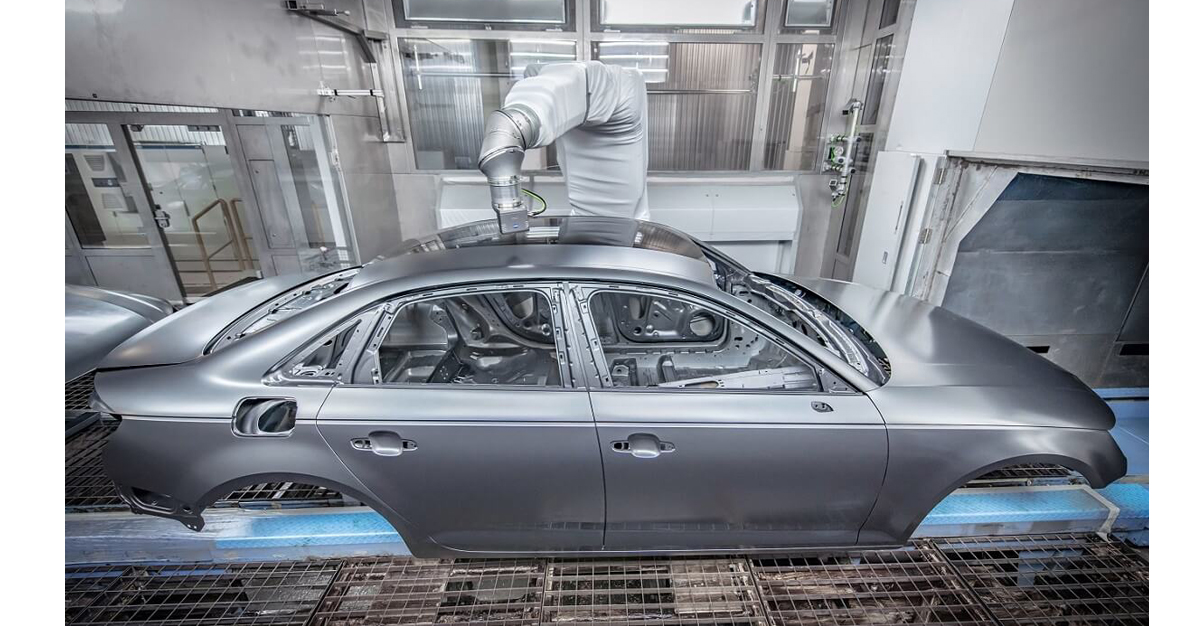
How Does Aluminium Paste Create a Metallic Effect?
Aluminium paste contains thin aluminium flakes that reflect light after they are distributed and oriented within the coating film.
When the flakes are well dispersed and properly aligned, they can create a smooth and bright metallic appearance. Differences in flake size, shape, orientation, and surface treatment can result in different visual effects.
Therefore, the selection of aluminium paste is an important factor in automotive metallic coatings.
1. Particle Size Affects Brightness and Smoothness
Particle size is one of the key factors affecting the appearance of automotive paint.
Fine aluminium flakes can provide a smoother and more uniform metallic surface, making them suitable for finishes where a refined appearance is required.
Larger particles can create stronger sparkle and a more noticeable metallic effect. However, the final result also depends on the coating formulation and application process.
The appropriate particle size should therefore be selected according to the desired appearance rather than simply choosing the finest grade.
2. Flake Orientation Affects Metallic Appearance
The orientation of aluminium flakes within the coating film has a significant effect on how light is reflected.
Good flake orientation can provide:
- Higher apparent brightness
- More uniform metallic appearance
- Better visual depth
- Smoother color transitions
Poor orientation or uneven dispersion may result in mottling, uneven brightness, or inconsistent appearance across the painted surface.
3. Leafing and Non-Leafing Grades Create Different Effects
Both leafing and non-leafing aluminium paste can be used in different coating systems, but they produce different pigment arrangements.
Leafing aluminium paste tends to orient toward the coating surface, creating a strong surface metallic effect.
Non-leafing aluminium paste remains more evenly distributed throughout the coating film and is widely considered when a more integrated metallic appearance is required.
For automotive applications, the choice should be based on the coating formulation and the required visual effect.
4. Surface Treatment and Compatibility Matter
Aluminium paste needs to be compatible with the resin, solvent, and other components of the automotive coating system.
Suitable surface treatment can help improve pigment stability and compatibility with the formulation. Good dispersion is also important because aluminium flakes need to be distributed evenly throughout the coating.
Before production, manufacturers should test the aluminium paste in the actual coating system to evaluate dispersion, appearance, and storage stability.
5. Batch Consistency Is Important for Automotive Coatings
Automotive coatings often require a high level of appearance consistency.
Even small differences in aluminium pigment characteristics can affect brightness, metallic effect, and color perception. Consistent particle size distribution, flake characteristics, and surface treatment can help reduce variation between batches.
For this reason, aluminium paste suppliers should provide stable product quality and consistent performance from batch to batch.
How to Choose Aluminium Paste for Automotive Paint?
When selecting aluminium paste for automotive paint, manufacturers should consider:
| Factor | Effect on Appearance |
|---|---|
| Particle Size | Brightness, smoothness, and sparkle |
| Flake Shape | Reflection and metallic uniformity |
| Flake Orientation | Brightness and visual depth |
| Leafing / Non-Leafing | Pigment arrangement and surface effect |
| Surface Treatment | Compatibility and stability |
| Dispersion | Uniformity and appearance consistency |
| Batch Consistency | Color and appearance repeatability |
Conclusion
Aluminium paste plays an important role in the final appearance of automotive metallic paint. Particle size, flake structure, orientation, surface treatment, and dispersion can all influence brightness, smoothness, depth, and color consistency.
Choosing the right aluminium paste for automotive paint and testing it under actual coating conditions can help manufacturers achieve a more stable and consistent metallic finish.
- Previous:Aluminium Paste for Paint: How to Choose the Right Grade?
- Next:I have no