Leafing vs Non-Leafing Aluminium Paste: How to Choose the Right Grade?
2026 / 09 / 21When selecting aluminium paste for coatings, one important decision is whether to use leafing aluminium paste or non-leafing aluminium paste.
The main difference is how the aluminium flakes orient within the coating film. This affects the metallic appearance, hiding power and final surface effect.
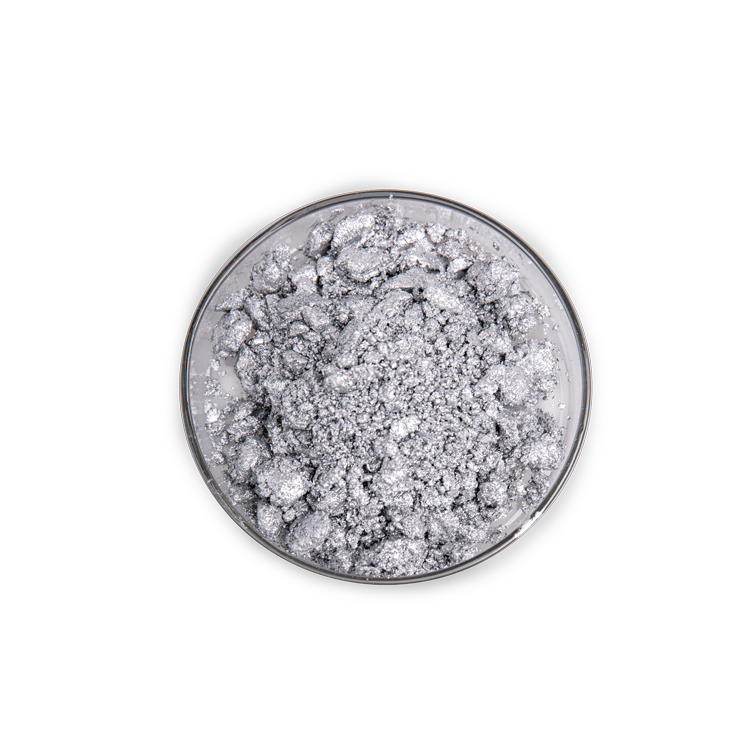
What Is Leafing Aluminium Paste?
Leafing aluminium paste is designed so that aluminium flakes tend to orient towards the surface of the coating film.
This can create a strong metallic and reflective appearance and is suitable for applications where surface-oriented aluminium pigment is required.
Key characteristics include:
- Strong metallic effect
- Good reflectivity
- Surface-oriented pigment arrangement
- Suitable coverage characteristics
The final effect also depends on particle size, coating formulation and application method.
What Is Non-Leafing Aluminium Paste?
Non-leafing aluminium paste is designed to remain more evenly distributed throughout the coating film.
It can provide a uniform metallic colour and is widely considered when manufacturers need consistent pigment distribution within the coating.
Key considerations include:
- Metallic colour
- Pigment distribution
- Dispersion
- Colour consistency
- Resin compatibility
Leafing vs Non-Leafing Aluminium Paste
| Feature | Leafing Aluminium Paste | Non-Leafing Aluminium Paste |
|---|---|---|
| Flake Orientation | Towards coating surface | More evenly distributed |
| Main Effect | Reflective metallic effect | Uniform metallic effect |
| Pigment Distribution | Surface-oriented | Throughout coating film |
| Selection Focus | Brightness and reflectivity | Colour and uniformity |
Neither type is suitable for every application. The right choice depends on the desired appearance and coating system.
How to Choose the Right Aluminium Paste?
For High Metallic Brightness
If the coating requires a strong reflective metallic effect, leafing aluminium paste may be considered.
Particle size should also be evaluated. Finer flakes can provide a smoother appearance, while larger flakes can produce stronger sparkle.
For Uniform Metallic Colour
If the coating requires a more evenly distributed metallic pigment and consistent colour, non-leafing aluminium paste may be more suitable.
Good dispersion and resin compatibility are particularly important.
For Water-Based Coatings
When using aluminium paste in water-based coatings, manufacturers should pay additional attention to compatibility, dispersion and stability.
Both leafing and non-leafing grades can be considered, but the selected product should be designed and tested for the specific coating system.
What Should Manufacturers Test?
Before purchasing leafing aluminium paste or non-leafing aluminium paste in bulk, manufacturers should test samples in their actual formulation.
Important evaluation points include:
- Metallic brightness
- Particle size
- Flake orientation
- Dispersion
- Colour consistency
- Resin compatibility
- Storage stability
- Final coating appearance
This helps manufacturers select the appropriate aluminium paste based on actual application performance rather than product specifications alone.
Conclusion
The choice between leafing aluminium paste and non-leafing aluminium paste depends mainly on the required metallic effect and coating system.
Leafing grades are generally considered for surface-oriented, reflective metallic effects, while non-leafing grades are used when a more uniform metallic distribution is required.
Before bulk purchasing, manufacturers should test the selected aluminium paste in their actual coating formulation and application process.