What Aluminum Paste Is Best for Automotive Coatings?
2026 / 09 / 05Automotive coatings require more than a basic silver appearance. Depending on the vehicle design and coating system, manufacturers may need high metallic brightness, smooth appearance, good flake orientation, hiding power, dispersion and consistent batch performance.
This makes the selection of aluminum paste for automotive coatings an important part of automotive paint formulation.
So, what aluminum paste is best for automotive coatings?
There is no single grade suitable for every automotive application. The right choice depends on the desired metallic effect, particle size, leafing behavior, coating system, surface treatment and application requirements.
1. Why Is Aluminum Paste Used in Automotive Coatings?
Aluminum paste is one of the most widely used metallic pigments for creating silver and metallic effects in automotive paints.
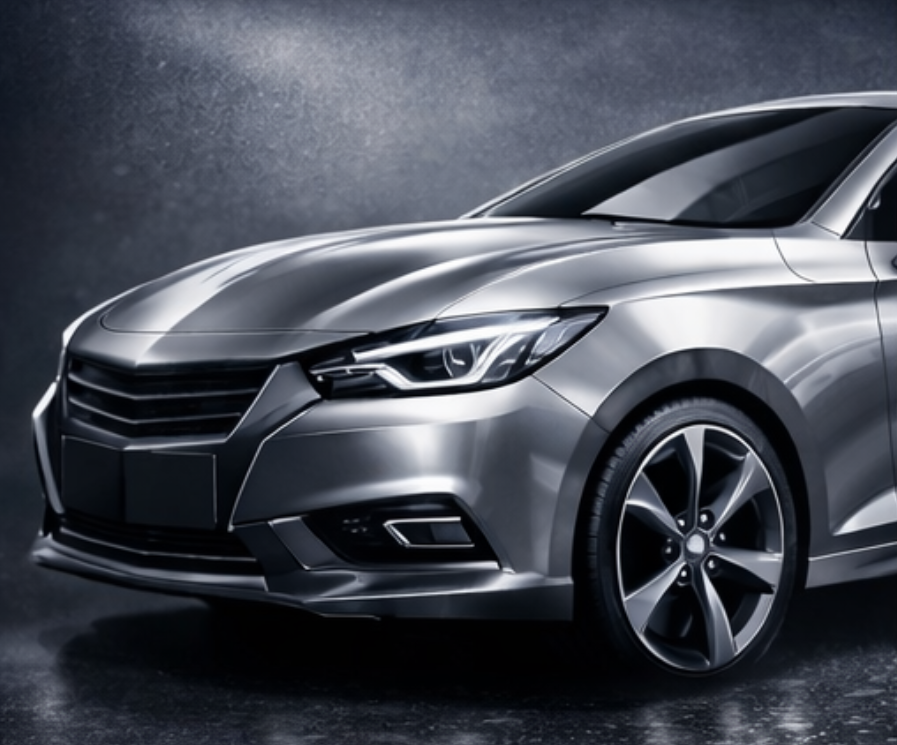
Aluminum flakes reflect light and create the characteristic metallic appearance found in many automotive finishes. By selecting different aluminum paste grades, coating manufacturers can achieve different levels of brightness, sparkle, smoothness and reflectivity.
Common applications include:
- Automotive OEM coatings
- Automotive refinish coatings
- Wheel coatings
- Plastic coatings
- Decorative automotive parts
- Industrial automotive components
The final appearance is determined not only by the aluminum paste itself, but also by flake size, shape, orientation, dispersion, resin system, film thickness and application conditions.
Therefore, choosing an automotive aluminum paste should always be based on the complete coating formulation rather than the pigment alone.
2. What Type of Aluminum Paste Is Best for Automotive Coatings?
Different automotive finishes require different aluminum paste characteristics.
Fine Particle Aluminum Paste
Fine aluminum paste is generally suitable when a smooth and refined metallic appearance is required.
It can help produce:
- Fine metallic texture
- Smooth silver appearance
- Uniform metallic effects
- Controlled visual appearance
Fine grades are often considered for automotive finishes where a refined and elegant metallic effect is preferred over strong sparkle.
High-Brightness Aluminum Paste
When a coating requires a brighter and more reflective metallic appearance, high-brightness aluminum paste can be considered.
These grades are designed to provide strong light reflection and a clean metallic appearance.
They can be suitable for:
- Premium silver finishes
- High-gloss automotive coatings
- Bright metallic colors
- Applications requiring strong visual impact
Non-Leafing Aluminum Paste
Non-leafing aluminum paste remains distributed throughout the coating film rather than concentrating mainly at the surface.
This makes non-leafing aluminum paste suitable for many automotive coating systems where a uniform metallic appearance and good compatibility with the coating film are required.
Key considerations include:
- Uniform metallic appearance
- Good dispersion
- Coating compatibility
- Color consistency
- Stable application performance
Leafing Aluminum Paste
Leafing aluminum paste has a different orientation behavior. The aluminum flakes tend to migrate toward the surface of the coating and form a more concentrated reflective layer.
This can create a strong metallic and reflective effect.
However, leafing and non-leafing aluminum paste are designed for different formulation requirements. The correct choice depends on the target appearance and coating system.
3. How Does Particle Size Affect Automotive Aluminum Paste?
Particle size is one of the important factors when selecting aluminum paste for automotive coatings.
Different particle sizes can create different visual effects:
| Aluminum Paste Grade | Typical Appearance |
|---|---|
| Fine particle | Smooth and refined metallic effect |
| Medium particle | Balanced metallic appearance |
| Coarser particle | Stronger sparkle and more pronounced metallic effect |
| High-brightness grade | Strong reflection and brighter metallic appearance |
However, particle size alone does not determine the performance of automotive aluminum paste.
Other factors, including flake shape, thickness, surface treatment, dispersion and orientation, can significantly affect the final coating appearance.
For this reason, automotive coating manufacturers should evaluate samples under their actual formulation and application conditions.
4. Water-Based or Solvent-Based Aluminum Paste?
The coating system is another important consideration.
Solvent-Based Automotive Coatings
Solvent-based automotive coatings require aluminum paste with suitable compatibility with the selected resin and solvent system.
Important factors include:
- Resin compatibility
- Dispersion
- Flake orientation
- Metallic brightness
- Storage stability
- Application performance
The aluminum paste should be selected according to the complete formulation rather than simply based on its appearance.
Water-Based Automotive Coatings
For waterborne automotive coatings, specially developed water-based aluminum paste should be considered.
Water-based aluminum paste is designed for compatibility with waterborne systems and should be evaluated for:
- Water dispersion
- Hydrogen gassing resistance
- Storage stability
- Resin compatibility
- Metallic brightness
- Flake orientation
Using an aluminum paste specifically developed for water-based systems can help manufacturers achieve more stable formulation performance.
5. What Should Automotive Coating Manufacturers Consider?
Before choosing aluminum paste for automotive coatings, manufacturers should evaluate several key factors.
1. Desired Metallic Effect
First determine the target appearance.
For example, the coating may require:
- Fine silver
- Bright silver
- Sparkling metallic
- High-gloss metallic
- Reflective or chrome-like appearance
The target appearance determines the direction of product selection.
2. Particle Size
Particle size influences metallic texture, sparkle and visual smoothness.
Fine grades can provide a more refined appearance, while larger flakes can create stronger sparkle and a more pronounced metallic effect.
3. Leafing or Non-Leafing Performance
The orientation behavior of the aluminum flakes should match the coating system and desired appearance.
For many automotive coating formulations, non-leafing aluminum paste can provide a uniform metallic effect throughout the coating film.
4. Dispersion Performance
Poor dispersion can cause:
- Uneven metallic appearance
- Color variation
- Flake aggregation
- Reduced brightness
- Surface defects
Good dispersion is therefore essential for achieving a consistent automotive finish.
5. Batch Consistency
Automotive coatings often require consistent appearance across large production volumes.
A reliable aluminum paste supplier should maintain consistent product characteristics between batches to help manufacturers control color and metallic appearance during production.
6. How to Test Aluminum Paste Before Bulk Purchase?
Before placing a bulk order, automotive coating manufacturers should test aluminum paste under their actual formulation and application conditions.
A practical evaluation process can include the following steps.
Step 1: Review Technical Specifications
Check the product's particle size, solid content, surface treatment and recommended application system.
Step 2: Test Dispersion
Evaluate how evenly the aluminum paste disperses in the selected resin and coating system.
Step 3: Evaluate Metallic Appearance
Apply the coating under controlled conditions and compare:
- Brightness
- Smoothness
- Sparkle
- Hiding power
- Metallic uniformity
Step 4: Check Stability
For water-based systems, evaluate storage stability and hydrogen gassing behavior. For solvent-based systems, evaluate compatibility and storage performance under the intended conditions.
Step 5: Compare Different Grades
Testing several aluminum paste grades can help manufacturers identify the most suitable product for their target automotive finish.
7. Why Does Supplier Experience Matter?
The same aluminum paste may perform differently in different coating formulations.
For this reason, choosing an experienced automotive aluminum paste manufacturer can provide advantages beyond the pigment itself.
A qualified supplier should be able to provide:
- Product selection support
- Sample testing
- Application recommendations
- Technical documentation
- Customized grades
- Stable bulk supply
- Technical troubleshooting
For automotive coating manufacturers, professional technical support can reduce the time needed to identify a suitable aluminum pigment and optimize the formulation.
8. ZQ Metallic Pigment: Reliable Aluminum Paste Manufacturing
With more than 39 years of manufacturing experience, ZQ Metallic Pigment specializes in the production and development of metallic pigments.
The company operates six manufacturing plants covering 202,000 m², supported by more than 50 R&D technicians and over 60 distributors worldwide.
ZQ Metallic Pigment provides aluminum paste solutions for different coating requirements, including:
- High-brightness aluminum paste
- Fine particle aluminum paste
- Leafing aluminum paste
- Non-leafing aluminum paste
- Water-based aluminum paste
- Resin-coated aluminum paste
- Special metallic-effect aluminum paste
Customers can request samples and technical documents such as TDS, SDS and COA for product evaluation before bulk purchasing.
ZQ Metallic Pigment is certified to:
- ISO 9001:2015
- ISO 14001:2015
- ISO 45001:2018
These certifications support the company's quality management, environmental management and occupational health and safety systems.
9. Conclusion: Which Aluminum Paste Should You Choose?
The best aluminum paste for automotive coatings depends on the specific formulation and desired finish.
For a refined metallic appearance, a fine particle grade may be appropriate. For brighter and more reflective finishes, high-brightness aluminum paste can be considered. For systems requiring uniform metallic distribution, non-leafing aluminum paste may be a suitable option. For waterborne automotive coatings, specially developed water-based aluminum paste should be evaluated.
Rather than selecting aluminum paste based only on price or its appearance in the container, manufacturers should conduct sample testing under actual formulation and application conditions.
By evaluating particle size, brightness, flake orientation, dispersion, compatibility and batch consistency, automotive coating manufacturers can make a more informed purchasing decision.
If you are looking for an aluminum paste manufacturer for automotive coatings, ZQ Metallic Pigment can provide product recommendations, samples and technical support based on your specific requirements.
Contact ZQ Metallic Pigment to discuss your automotive aluminum paste requirements and find a suitable grade for your coating system.
- Previous:What Type of Aluminum Paste Should Be Used for Water-Based Coatings?
- Next:I have no