How Aluminium Powder Affects Metallic Effect in Powder Coatings
2026 / 07 / 04In powder coating systems, the final metallic appearance is not determined only by formulation or resin type, but is strongly influenced by the characteristics of aluminium powder itself. Factors such as particle size, flake structure and dispersion behavior play a key role in defining brightness, texture and overall visual quality.
Understanding how aluminium powder affects metallic effects is essential for manufacturers aiming to achieve stable and high-quality powder coating finishes.
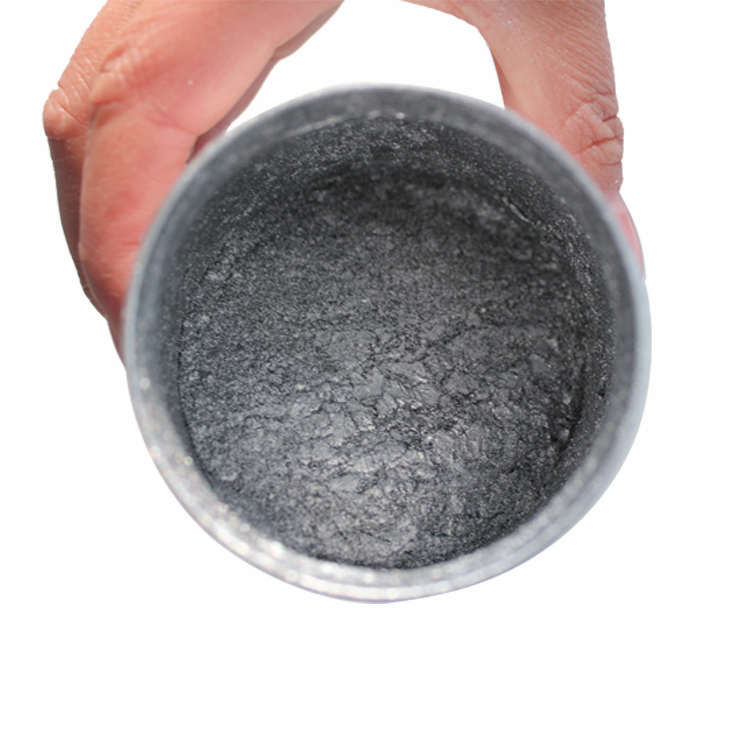
Particle Size and Metallic Brightness
One of the most important factors influencing metallic appearance is particle size distribution.
In powder coatings, different particle sizes create different visual effects:
- Fine aluminium powder produces a smoother and more uniform metallic surface
- Medium particle sizes provide a balanced combination of brightness and texture
- Coarser particles create stronger sparkle and a more decorative metallic effect
Smaller particles tend to reflect light more evenly, resulting in a softer silver appearance, while larger particles enhance visual contrast and metallic depth.
Flake Structure and Light Reflection
Aluminium powder used in powder coatings typically consists of flake-shaped particles. These flakes influence how light is reflected on the coating surface.
When properly oriented within the coating film, aluminium flakes:
- Increase surface reflectivity
- Enhance metallic brightness
- Create directional light reflection effects
- Improve decorative visual depth
The alignment and distribution of flakes directly affect whether the final surface appears smooth, bright or highly decorative.
Dispersion Quality and Coating Uniformity
Another critical factor is how well aluminium powder disperses within the powder coating system.
Good dispersion leads to:
- Uniform metallic appearance
- Reduced surface defects
- Stable coating color consistency
- Improved processing efficiency
Poor dispersion, on the other hand, may cause uneven metallic effects, agglomeration or inconsistent surface texture.
Particle Distribution and Visual Consistency
Not only particle size, but also particle size distribution plays an important role in final coating performance.
A narrow and controlled distribution helps ensure:
- Consistent metallic reflection
- Stable batch-to-batch appearance
- Predictable coating behavior
- Reduced variation in production results
This is especially important for industrial applications where visual consistency is required across large production volumes.
Impact on Different Powder Coating Effects
Aluminium powder characteristics influence different types of metallic finishes:
Smooth Metallic Finishes
Achieved with fine and well-dispersed aluminium particles, commonly used in architectural coatings and appliance surfaces.
Sparkling Metallic Effects
Produced by medium or coarse particles, often used for decorative or consumer product coatings.
High-Depth Metallic Appearance
Achieved through controlled particle blending and optimized flake orientation.
Process Compatibility in Powder Coating Systems
Aluminium powder must also be compatible with powder coating processing conditions such as electrostatic spraying and curing temperature.
Key performance requirements include:
- Stable behavior during electrostatic application
- Resistance to agglomeration during processing
- Consistent melting and film formation
- Compatibility with resin systems
These factors ensure the aluminium powder performs reliably during industrial production.
Conclusion
Aluminium powder significantly influences the metallic effect in powder coatings through its particle size, flake structure, dispersion behavior and distribution control. By selecting the appropriate grade and optimizing formulation conditions, manufacturers can achieve a wide range of metallic finishes from smooth silver surfaces to decorative sparkling effects.
As powder coating applications continue to expand across architectural, industrial and consumer markets, understanding the role of aluminium powder is essential for achieving consistent and high-quality metallic performance.