Aluminium Paste for Automotive OEM Coatings
2026 / 03 / 04As global automotive manufacturing continues to evolve toward higher appearance standards and tighter quality control, metallic effect coatings remain a key differentiator for vehicle brands. Among the core materials behind premium metallic finishes, aluminium paste plays a decisive role in achieving brightness, uniformity, and long-term durability in OEM coating systems.
Growing Demand for High-Performance Automotive Coatings
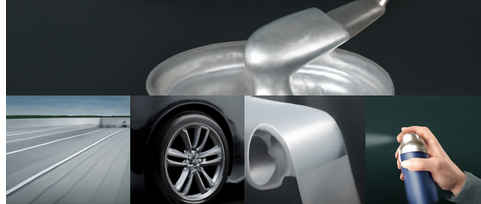
Automotive production is increasingly focused on surface aesthetics, durability, and process efficiency. Modern vehicle coatings must deliver:
-
Consistent metallic brightness
-
Smooth surface appearance
-
Excellent weather resistance
-
Stable batch-to-batch performance
OEM manufacturers are no longer satisfied with simple metallic shimmer. They require controlled light reflection, uniform flake orientation, and minimal color deviation across mass production runs. This places higher technical demands on aluminium paste used in basecoat systems.
OEM Requirements for Metallic Effect Performance
In automotive OEM coatings, metallic pigments must meet strict standards in:
1. Flake Orientation and Smoothness
Well-structured aluminium flakes allow optimal alignment in the paint film, resulting in a refined and uniform metallic appearance.
2. Controlled Sparkle and Brightness
The metallic effect must enhance vehicle design without appearing coarse or uneven.
3. Color Stability in Mass Production
Automotive assembly lines require stable raw materials that ensure consistent appearance across thousands of vehicles.
4. Compatibility with Multi-Layer Coating Systems
Modern automotive coatings typically include primer, basecoat, and clearcoat systems. Aluminium paste must perform reliably within this structure.
Recommended Particle Size Range: D50 5–9 μm
For most automotive OEM basecoat systems, a D50 particle size range between 5–9 μm provides an ideal balance between brightness and smooth texture.
-
5–6 μm: Produces a refined metallic texture with smoother visual effect
-
7–8 μm: Offers balanced brightness and metallic depth
-
9 μm: Delivers stronger sparkle while maintaining uniformity
A narrow particle size distribution is essential to prevent mottling, floating, or uneven metallic alignment. Consistent control of D50 ensures predictable optical performance and easier color matching during formulation.
Stable Supply and Production Consistency
Automotive OEM projects require long-term cooperation and dependable supply capacity. Aluminium paste manufacturers must ensure:
-
Strict quality control across batches
-
Stable non-volatile content
-
Controlled flake morphology
-
Reliable lead times
Production consistency reduces formulation adjustments and minimizes risks during large-scale vehicle manufacturing.
Compatibility with Automotive Resin Systems
Automotive OEM coatings commonly use solvent-based and water-based resin systems, including:
-
Acrylic resins
-
Polyester resins
-
Polyurethane systems
-
Hybrid resin technologies
High-quality aluminium paste should demonstrate:
-
Excellent dispersion properties
-
Good solvent compatibility
-
Stable performance under baking conditions
-
Minimal reaction with coating additives
Proper resin compatibility ensures smooth processing, uniform metallic alignment, and strong adhesion within multi-layer automotive coating structures.
Supporting Premium Automotive Finishes
As vehicle design becomes more sophisticated, metallic coatings continue to serve as a signature element of brand identity. Aluminium paste with controlled particle size, stable brightness, and reliable processing behavior enables automotive OEM manufacturers to deliver premium surface finishes with confidence.
By combining precise flake engineering, consistent production standards, and strong system compatibility, aluminium paste remains a fundamental material in modern automotive coating technology.