Why Water-Based Aluminum Paste Is Difficult to Disperse: Causes and Practical Solutions
2026 / 04 / 11With tightening environmental regulations and increasing demand for low-VOC coatings, waterborne systems are becoming mainstream across industrial coatings, inks, and protective applications. However, formulators often face a persistent challenge: water-based aluminum paste is difficult to disperse properly.
Poor dispersion can result in floating particles, uneven metallic effect, reduced corrosion resistance, and unstable storage performance. Understanding the root causes behind dispersion difficulties is essential for achieving optimal coating performance.
This article analyzes the technical reasons behind dispersion problems and provides practical, field-tested solutions for improving water-based aluminum paste stability and performance.
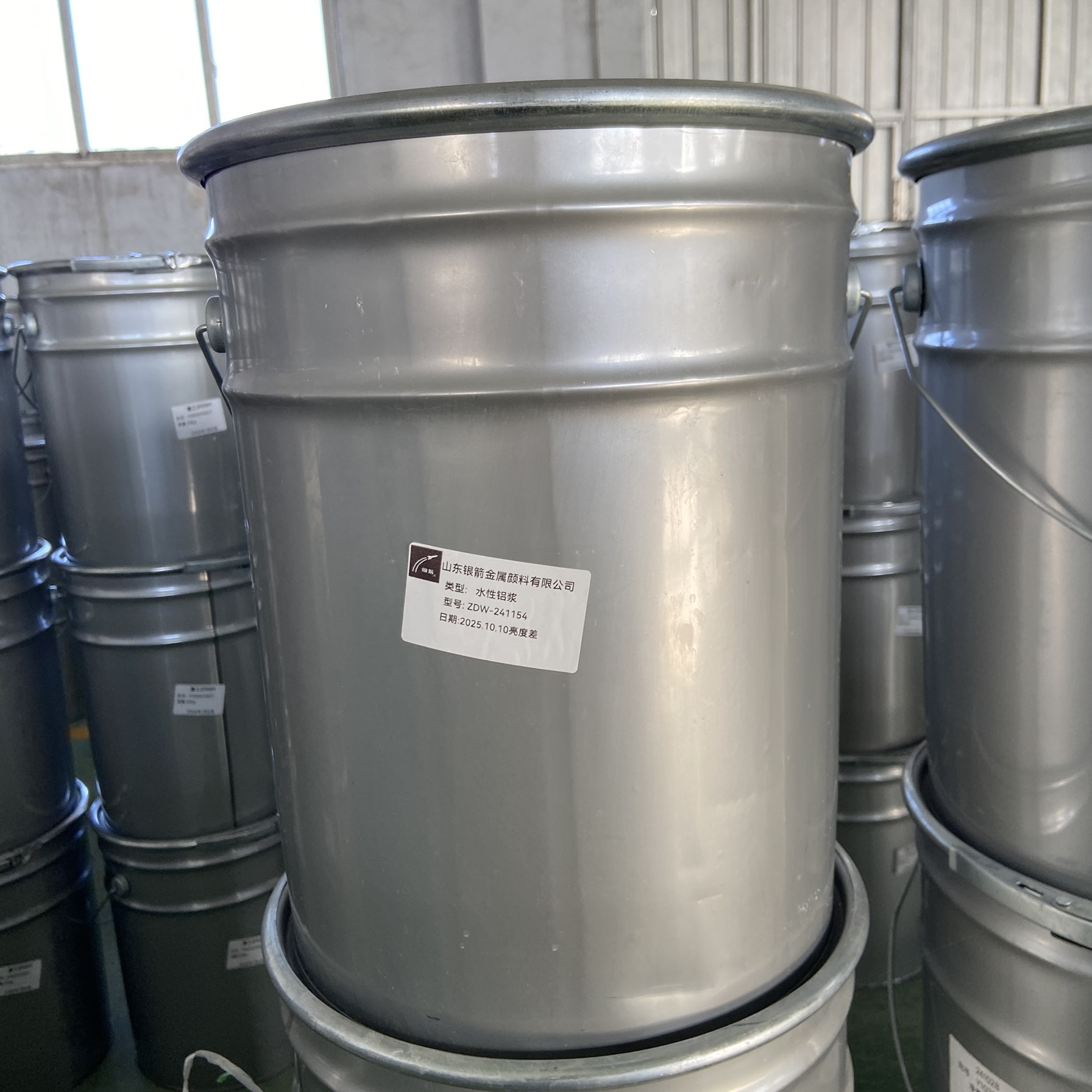
1. Surface Chemistry Incompatibility
Problem
Traditional aluminum paste is manufactured for solvent-based systems. Its surface is typically coated with organic treatment agents compatible with hydrocarbons.
Water, being highly polar, does not naturally wet hydrophobic aluminum flakes. This leads to:
- Floating aluminum particles
- Agglomeration
- Poor leveling
- Surface defects
Solution
Use waterborne-grade aluminum paste with specialized surface treatment designed for aqueous systems. These treatments improve hydrophilicity while maintaining metallic brightness.
Recommended approach:
- Confirm the aluminum paste is specifically labeled for water-based systems.
- Review technical data sheets for water compatibility indicators.
- Conduct small-scale wetting tests before full production.
2. Hydrogen Gas Generation Risk
Problem
Aluminum reacts with water under certain conditions, especially in alkaline environments:
Al + H₂O → Hydrogen gas formation
This can cause:
- Foam formation
- Pressure build-up in containers
- Safety risks
- Loss of metallic performance
Solution
High-quality water-based aluminum paste uses controlled surface passivation technology to prevent direct metal-water reaction.
Best practices:
- Maintain system pH between 6.5–8.5
- Avoid strong alkaline additives
- Use corrosion inhibitors if necessary
- Ensure sealed storage conditions
3. Improper Dispersion Process
Problem
Aluminum flakes are delicate and plate-like. Excessive shear force during dispersion can:
- Break flake structure
- Reduce metallic brightness
- Damage anti-corrosion barrier effect
- Increase sedimentation
Solution
Follow controlled dispersion procedures:
Recommended Dispersion Steps
- Pre-mix binder and additives first
- Add aluminum paste slowly under low-speed stirring
- Avoid high-speed grinding after aluminum addition
- Maintain moderate shear levels
- Monitor temperature during mixing
Aluminum paste should typically be added during the final mixing stage, not during high-speed pigment grinding.
4. Inadequate Wetting and Dispersing Agents
Problem
Waterborne systems require specific wetting agents to reduce surface tension between water and metallic flakes. Without proper additives:
- Aluminum particles float to the surface
- Poor orientation occurs
- Metallic effect becomes uneven
Solution
Select dispersing agents specifically compatible with metallic pigments in waterborne systems.
Key selection criteria:
- Non-ionic or low-foam surfactants
- Compatible with aluminum surface treatment
- Does not increase corrosion risk
- Stable under storage conditions
Lab screening of dispersant combinations is strongly recommended.
5. Storage Instability and Sedimentation
Problem
Water-based aluminum paste may settle during storage due to density differences between metal flakes and water.
This leads to:
- Hard sediment formation
- Difficult redispersion
- Reduced shelf life
Solution
Improve formulation rheology:
- Adjust viscosity using suitable thickeners
- Use anti-settling additives
- Maintain proper packaging and temperature control
Additionally, regular batch testing ensures long-term stability.
6. Practical Dispersion Optimization Checklist
Before production, confirm the following:
✔ Aluminum paste is waterborne-grade
✔ Surface treatment prevents hydrogen reaction
✔ pH level is controlled
✔ Shear speed is moderate
✔ Proper dispersants are selected
✔ Final viscosity supports suspension
✔ Lab stability testing completed
This systematic approach significantly reduces production risk.
7. Why Technical Support Matters
Water-based aluminum paste requires precise formulation control. An experienced supplier should provide:
- Technical data sheets
- Recommended dispersion procedures
- Compatibility testing guidance
- Sample support for lab evaluation
- Stable batch consistency
Professional technical collaboration improves efficiency and reduces reformulation costs.
Conclusion
Dispersion difficulties in water-based aluminum paste systems are primarily caused by:
- Surface incompatibility
- Hydrogen reaction risk
- Excessive shear during mixing
- Improper dispersant selection
- Storage instability
By selecting properly treated waterborne aluminum paste and applying optimized dispersion processes, manufacturers can achieve:
- Uniform metallic effect
- Stable storage performance
- Improved corrosion resistance
- Safe production conditions
- Long-lasting coating durability
As waterborne technologies continue to expand, mastering aluminum paste dispersion becomes a key competitive advantage in modern coating formulation.