Aluminium Paste for Printing Inks: Key Factors Before Bulk Purchasing
2026 / 11 / 27
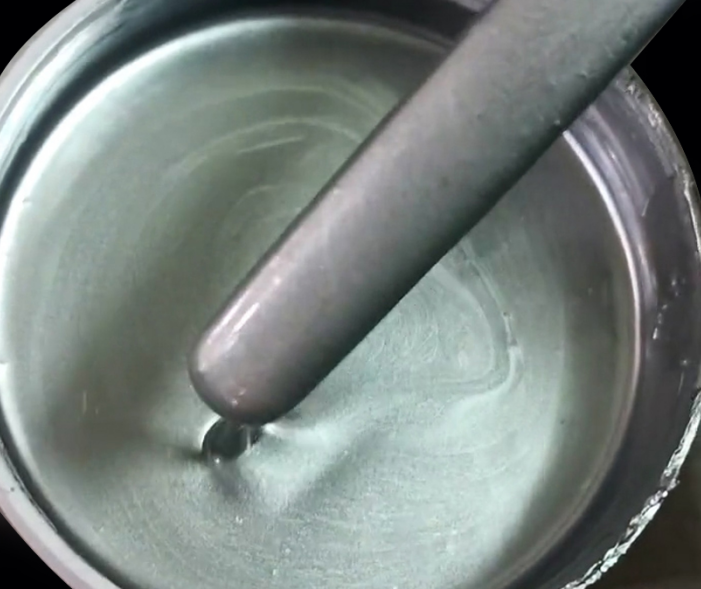 1. Why Does Aluminium Paste Selection Matter in Printing Inks?
Metallic printing inks are widely used in packaging, decorative printing, labels and other applications where an attractive silver metallic appearance is required.
Aluminium paste for printing inks plays an important role in creating metallic visual effects. However, selecting a suitable product involves more than comparing brightness or particle size.
Different printing processes, ink formulations and application requirements can influence the final printing result. For ink manufacturers, choosing the appropriate aluminium paste helps improve formulation compatibility and maintain consistent printing performance.
Before placing a bulk order, buyers should evaluate several important factors.
2. Match Aluminium Paste with the Printing Process
The printing method is one of the first factors to consider when selecting metallic pigments.
Different printing processes have different requirements for ink viscosity, pigment dispersion and printing stability.
Gravure Printing
Gravure printing is commonly used for flexible packaging and decorative printed materials. Aluminium paste used in gravure inks should be evaluated for compatibility with the ink system, dispersion characteristics and suitability for the printing equipment.
Flexographic Printing
Flexographic printing is widely applied in packaging materials, labels and paper products. When selecting aluminium paste, ink manufacturers should consider formulation requirements, transfer performance and the consistency of the metallic effect.
Other Printing Applications
For other printing applications, the selection should be based on the actual substrate, printing process and desired metallic appearance.
There is no single aluminium paste grade suitable for every printing system. Practical formulation testing remains important.
3. Evaluate Metallic Appearance and Particle Characteristics
The appearance of metallic ink is influenced by several pigment characteristics, including particle size distribution, flake structure and orientation within the ink film.
Before selecting aluminium paste, buyers should consider:
-
Brightness: Whether the pigment can provide the desired silver metallic appearance.
-
Particle Size: Whether the particle characteristics are appropriate for the printing process and required visual effect.
-
Surface Appearance: Whether the printed surface meets the expected metallic effect and visual consistency.
-
Dispersion: Whether the pigment can be incorporated into the ink formulation without creating unwanted agglomeration.
A finer particle structure and a coarser particle structure may produce different visual effects. The appropriate choice depends on the printing application rather than particle size alone.
4. Check Compatibility with the Ink Formulation
Formulation compatibility is another important consideration when purchasing aluminium paste for printing inks.
Aluminium pigments need to work with the selected resin, solvent system and other formulation components.
Ink manufacturers should pay attention to:
-
Resin compatibility and formulation stability.
-
Solvent compatibility with the selected aluminium paste.
-
Pigment dispersion under suitable mixing conditions.
-
Storage stability of the finished metallic ink.
-
Printing performance under actual production conditions.
For solvent-based printing inks, buyers should confirm that the aluminium paste is suitable for the intended solvent and resin system.
For water-based printing inks, additional attention should be given to the surface treatment of the aluminium pigment and its compatibility with the water-based formulation.
The recommended approach is to conduct laboratory testing before introducing a new aluminium paste into large-scale production.
5. What Should Be Tested Before a Bulk Order?
A successful laboratory sample does not automatically guarantee the same results during mass production.
Before confirming a bulk purchase, ink manufacturers should establish a practical testing procedure.
| Evaluation Item | What to Check |
|---|---|
| Appearance | Silver brightness and metallic effect |
| Particle Characteristics | Particle size and distribution |
| Dispersion | Compatibility with the ink formulation |
| Printing Test | Performance on the intended printing equipment |
| Adhesion | Compatibility with the selected substrate and ink system |
| Storage Stability | Changes in appearance or formulation during storage |
| Batch Consistency | Similarity between different production batches |
Testing should be carried out using the actual ink formulation and intended printing conditions whenever possible.
Clear technical communication between the pigment supplier and ink manufacturer can also help identify potential formulation issues before bulk production.
6. Choosing an Aluminium Paste Supplier for Printing Inks
For B2B buyers, selecting an aluminium paste supplier involves more than comparing the price per kilogram.
A suitable supplier should be able to provide relevant technical information and communicate clearly about product specifications and application requirements.
Before placing an order, buyers can confirm:
-
Whether the supplier offers aluminium paste suitable for the intended printing application.
-
Whether technical data and product specifications are available.
-
Whether product recommendations can be discussed according to the ink formulation.
-
Whether batch quality and product specifications are managed consistently.
-
Whether the supplier can support communication during sample evaluation and bulk purchasing.
These factors help buyers assess the overall suitability of a supplier and reduce uncertainty during procurement.
7. Discuss Your Printing Ink Requirements with ZQ Metallic
Zhangqiu Metallic Pigment Co., Ltd. (ZQ Metallic) specializes in metallic pigment products, with aluminium paste as a key product category.
For printing ink manufacturers and international buyers, product selection should be based on the actual printing process, ink formulation, substrate and desired metallic appearance.
When making an inquiry, please provide the following information:
-
Intended printing process, such as gravure or flexographic printing.
-
Ink formulation type, such as solvent-based or water-based.
-
Required metallic appearance.
-
Application and substrate information.
-
Estimated purchasing quantity.
With these details, the product requirements can be discussed more efficiently.
Contact ZQ Metallic
Website: https://www.zqmetallic.com/
Email: info@zqmetallic.com
Contact our team to discuss aluminium paste requirements for your printing ink applications.
Frequently Asked Questions
Q1. What is aluminium paste used for in printing inks?
Aluminium paste is used as a metallic pigment to create silver metallic effects in printing inks, including inks for packaging, labels and decorative printing.
Q2. Can aluminium paste be used in gravure printing inks?
Yes, suitable aluminium paste can be used in gravure printing inks. The selection should consider the ink formulation, solvent system, printing equipment and desired metallic effect.
Q3. What factors affect the metallic appearance of aluminium paste in printing?
Particle size, particle structure, pigment orientation, dispersion quality and ink film characteristics can all influence the final metallic appearance.
Q4. Is water-based aluminium paste suitable for printing inks?
Some specially designed water-based aluminium pastes can be used in water-based ink systems. Buyers should confirm the surface treatment and formulation compatibility before use.
Q5. What should buyers confirm before ordering aluminium paste in bulk?
Buyers should evaluate product specifications, formulation compatibility, printing performance, storage stability and batch consistency before confirming a bulk order.
- Previous:Aluminium Paste Price: What Buyers Should Know Before Requesting a Quote
- Next:I have no