Improving Metallic Powder Coating Performance: From Pigment Technology to Production Line
2026 / 11 / 24
Despite fluctuations in demand across traditional coating markets, the use of powder coatings continues to expand into industrial equipment, architectural profiles, household appliances, metal furniture, and other applications.
Metallic powder coatings, in particular, offer manufacturers opportunities to develop more distinctive surface finishes. However, achieving a consistent metallic appearance on an industrial production line is not always straightforward.
For coating manufacturers, the main challenges often arise during pigment incorporation, bonding, application, and powder recovery.
Common production problems include:
-
Unbonded metallic powder: Differences in particle size and density between base powder and metallic pigments can lead to separation, uneven application, and inconsistent colour distribution.
-
Bonded metallic powder: Mechanical stress during the bonding process may damage the protective coating on aluminium flakes, potentially affecting the corrosion resistance and weatherability of the finished coating.
-
Application and powder recovery: Complex workpieces, electrostatic application conditions, and powder recycling can contribute to uneven edge coverage and colour variations between production batches.
These issues demonstrate that metallic powder coating performance depends not only on the coating formulation but also on pigment surface treatment, product selection, and process control.
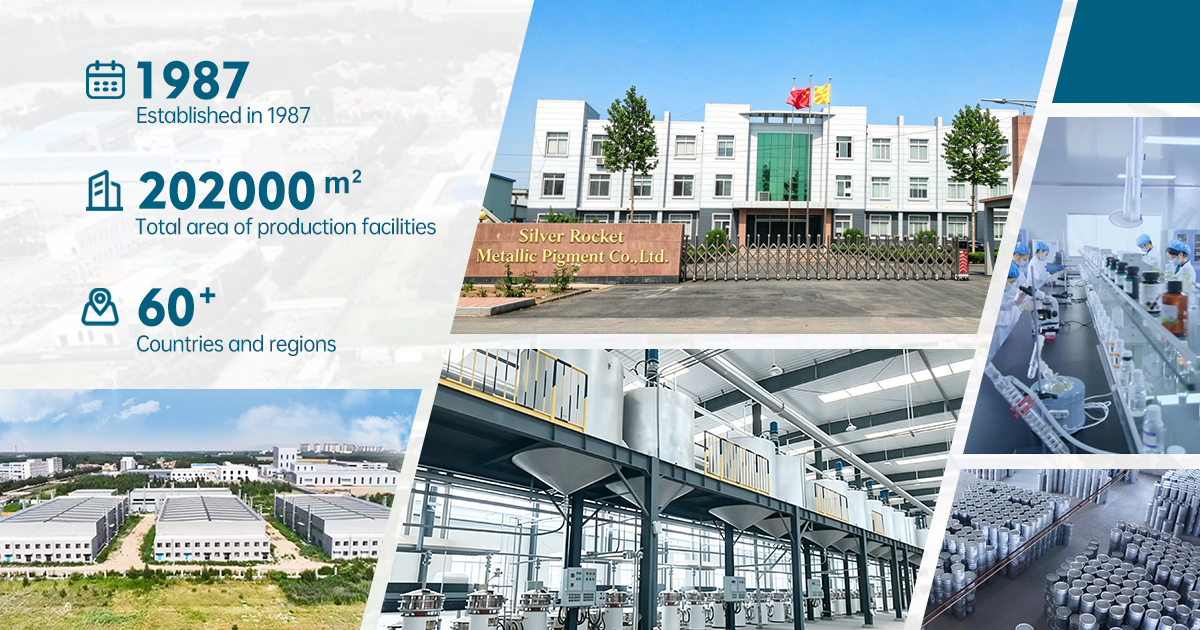
With a history dating back to 1987, Shandong Silver Arrow has developed extensive experience in metallic pigments. The company integrates research and development, manufacturing, and sales, supplying aluminium pigments and bronze powders for different metallic coating applications.
Based on years of industry experience, Silver Arrow recognises that coating manufacturers need more than attractive metallic pigments. They need products designed around the actual demands of their production processes.
The following sections examine several important challenges and explain how appropriate pigment technologies can help coating manufacturers address them.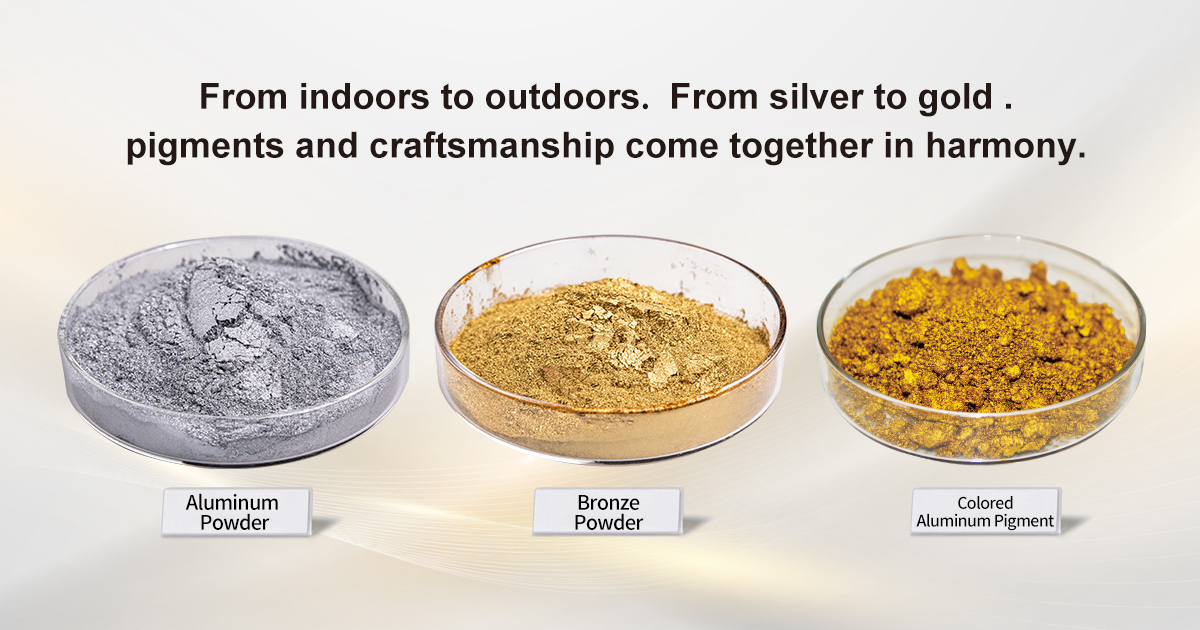
1. Bonding Technology: Improving Metallic Powder Consistency Without Compromising Pigment Protection
In metallic powder coating production, bonding is commonly used to attach metallic pigments to the surface of base powder particles through controlled thermal and mechanical processing.
Compared with conventional dry blending, bonding can help reduce pigment separation, improve application consistency, and support more uniform colour distribution. It can also help minimise differences between virgin and recovered powder when the process is properly controlled.
However, the bonding process places mechanical stress on aluminium flakes. Excessive shear or unsuitable processing conditions may affect the integrity of the protective layer surrounding the flakes.
This is particularly important for outdoor powder coatings, where the protective treatment contributes to the aluminium pigment's resistance to environmental exposure.
To meet different bonding and application requirements, Shandong Silver Arrow offers several coated aluminium pigment series with different surface structures:
-
YJR Series – Silica-Coated Aluminium Pigments: Designed with a silica-based protective treatment for relevant metallic powder coating applications.
-
YJS Series – Dense Silica-Coated Aluminium Pigments: Features a denser silica coating structure for applications requiring enhanced protection.
-
YJU Series – Dual-Layer Coated Aluminium Pigments: Combines a dense silica layer with an additional polymer resin layer to provide a more advanced protective structure.
These products are developed to address different requirements for pigment protection, processing conditions, and coating performance.
Selecting the right series requires consideration of the bonding process, application environment, and performance targets rather than relying on the coating structure alone.
2. Outdoor Metallic Powder Coatings: Surface Protection Is Essential for Long-Term Performance
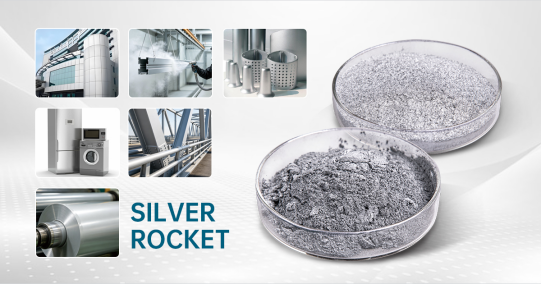
Aluminium pigments are widely used to create silver metallic effects in powder coatings. Their surface treatment plays an important role in determining how well the pigments withstand environmental exposure.
The requirements for indoor and outdoor applications can be quite different.
Indoor Applications
For indoor appliances, electrical cabinets, hardware products, and decorative metal components, conventional aluminium pigments may be suitable when the required appearance and application conditions are met.
Cost, metallic brightness, particle size, and compatibility with the powder coating process are important selection factors.
Outdoor Applications
Architectural aluminium profiles, metal fences, construction machinery, and products exposed to coastal environments require more attention to corrosion resistance and weatherability.
For these applications, coated non-leafing aluminium pigments are important options to evaluate.
YJS and YJU: Different Protective Structures for Different Exposure Conditions
The Silver Arrow YJS series uses a dense inorganic silica coating to help isolate aluminium flakes from environmental factors such as moisture and corrosive substances.
For applications with more demanding durability requirements, the YJU series incorporates an additional polymer resin layer over the silica coating.
This dual-layer structure is designed to provide additional protection and can be considered for powder coating systems targeting demanding outdoor exposure, including applications requiring improved resistance to UV exposure and salt spray.
Actual performance depends on the complete coating formulation, pigment loading, pretreatment, application conditions, and curing process. Product suitability should therefore be confirmed through relevant testing.
Three Factors to Consider When Selecting Outdoor Aluminium Pigments
1. Evaluate the Exposure Environment
For general outdoor applications, dense silica-coated pigments such as the YJS series can be considered. For more demanding exposure conditions, including high salt-spray requirements, the YJU dual-layer series may be worth evaluating.
2. Match Particle Size to the Desired Metallic Effect
Fine aluminium flakes generally produce a smoother, more refined metallic appearance, while larger flakes can create stronger sparkle and visual texture.
Particle size also affects the specific surface area of the flakes. Finer particles may present different coating and processing demands, so particle size selection should be coordinated with the protective treatment and bonding parameters.
3. Verify the Finished Coating Performance
Do not evaluate aluminium pigments only by their appearance before application. Test the finished coating under the intended production and exposure conditions, including relevant weathering, corrosion, and adhesion evaluations.
3. Bronze Powder in Metallic Powder Coatings: Balancing Gold Appearance and Application Limitations
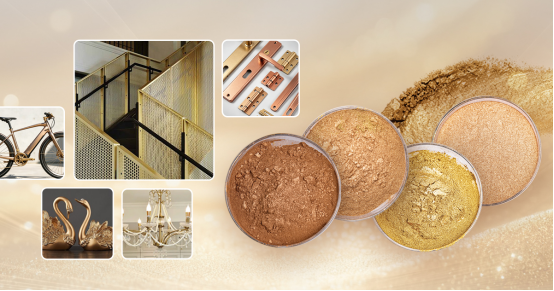
Silver metallic effects are not the only demand in decorative powder coatings. Gold finishes are also widely used in lighting products, hardware accessories, furniture, and decorative components.
Bronze powder, a copper-zinc alloy pigment, is a traditional choice for achieving gold metallic effects.
Its main advantages include:
-
A distinctive metallic gold appearance.
-
Multiple colour shades and opportunities for colour adjustment.
-
Good hiding power in suitable formulations.
-
Attractive material cost for many indoor decorative applications.
However, bronze powder has limitations that manufacturers should consider before using it in powder coating formulations.
Oxidation and Weather Resistance
Copper-based materials can oxidise when exposed to moisture, oxygen, and unsuitable environmental conditions. This may lead to darkening or colour changes over time.
For this reason, conventional bronze powder should be carefully evaluated before being used in demanding outdoor applications.
Sensitivity to Curing Conditions
The copper-zinc composition of bronze powder makes its colour appearance sensitive to processing conditions. Excessive curing temperatures or prolonged heating may contribute to colour variation and changes in surface gloss.
Manufacturers should follow the recommended processing window and evaluate the finished coating under actual curing conditions.
Chemical and Corrosion Resistance
Exposure to unsuitable alkaline environments and aggressive cleaning agents may accelerate surface deterioration.
For applications requiring long-term outdoor durability or stronger chemical resistance, alternative gold-effect pigment technologies may be more appropriate.
Overall, bronze powder remains a practical option for many indoor decorative applications, provided that the formulation and curing conditions are properly controlled.
4. WSRC Iron Oxide-Coated Gold Aluminium Pigments: An Alternative for Demanding Gold Metallic Applications
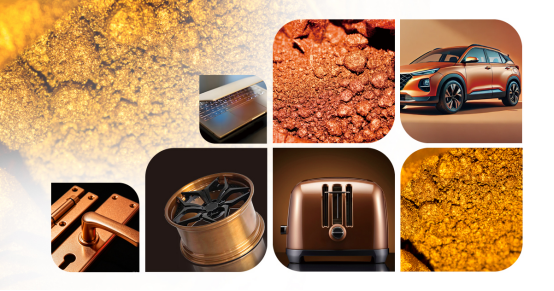
For manufacturers seeking gold metallic effects with improved outdoor application potential, iron oxide-coated aluminium pigments provide another option.
Silver Arrow's WSRC Series uses an inorganic iron oxide coating process to create gold-coloured aluminium pigments.
By controlling the coating process, different gold shades can be developed to meet varying decorative requirements.
Compared with conventional bronze powder, this type of pigment combines the metallic reflection of aluminium flakes with the colour characteristics of an iron oxide coating.
Its key application advantages include:
-
Adjustable gold metallic shades.
-
A distinctive metallic lustre.
-
An alternative approach to traditional bronze pigments.
-
Potential for applications where improved weatherability is required.
The WSRC series offers powder coating manufacturers another option when developing gold metallic finishes, particularly for projects where conventional bronze powder may not meet the required durability targets.
As with other metallic pigments, final performance should be verified through formulation trials and appropriate environmental testing.
5. Matching Metallic Pigment Technology to the Final Application
There is no single metallic pigment suitable for every powder coating project.
The selection process should consider the desired colour, production method, exposure environment, and final performance requirements.
| Application Requirement | Pigment Option to Evaluate | Main Consideration |
|---|---|---|
| Standard indoor silver finishes | Conventional aluminium pigments | Appearance and cost |
| Bonded metallic powder coatings | Suitable coated aluminium pigments | Bonding resistance and colour consistency |
| General outdoor silver finishes | YJS dense silica-coated series | Protective coating and weatherability |
| Demanding outdoor silver finishes | YJU dual-layer coated series | Enhanced protective structure |
| Indoor gold metallic finishes | Bronze powder | Colour, processing temperature, and cost |
| Gold metallic finishes requiring improved durability | WSRC iron oxide-coated gold aluminium pigments | Colour stability and environmental resistance |
The table provides general selection guidance. Final product selection should be based on technical data, formulation compatibility, production trials, and application-specific performance testing.
Silver Arrow: Metallic Pigment Solutions for Powder Coating Manufacturers
The development of metallic powder coatings requires coordination between pigment technology and coating production processes.
From bonding and pigment protection to outdoor durability and gold-effect development, every stage can influence the quality of the final coating.
Since 1987, Shandong Silver Arrow has focused on metallic pigments, developing product solutions for different silver and gold metallic effect requirements.
Its product portfolio includes conventional aluminium pigments, silica-coated aluminium pigments, dual-layer coated aluminium pigments, bronze powders, and iron oxide-coated gold aluminium pigments.
Whether you are developing indoor decorative powder coatings, outdoor architectural finishes, or specialised gold metallic effects, selecting the appropriate pigment is an important step toward improving production consistency and finished coating quality.
- Previous:How to Choose an Aluminium Paste Manufacturer in China
- Next:I have no